

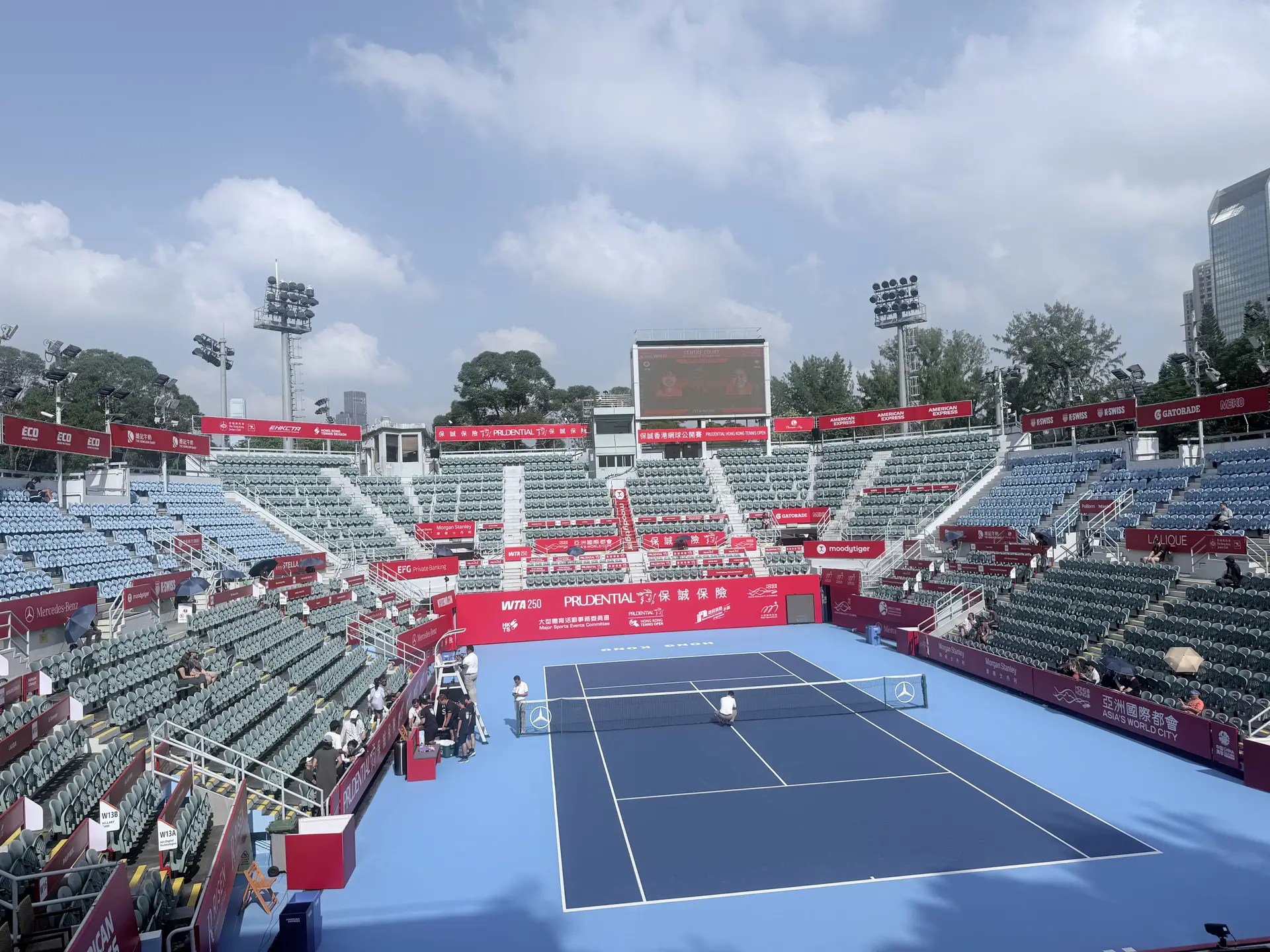
When Cody Wong Hong-yi walked onto centre court at Victoria Park at 10 a.m. on Oct. 31, most of the seats around her were empty. Older fans drifted in through the security check in small groups as she broke serve early against second seed Himeno Sakatsume of Japan.
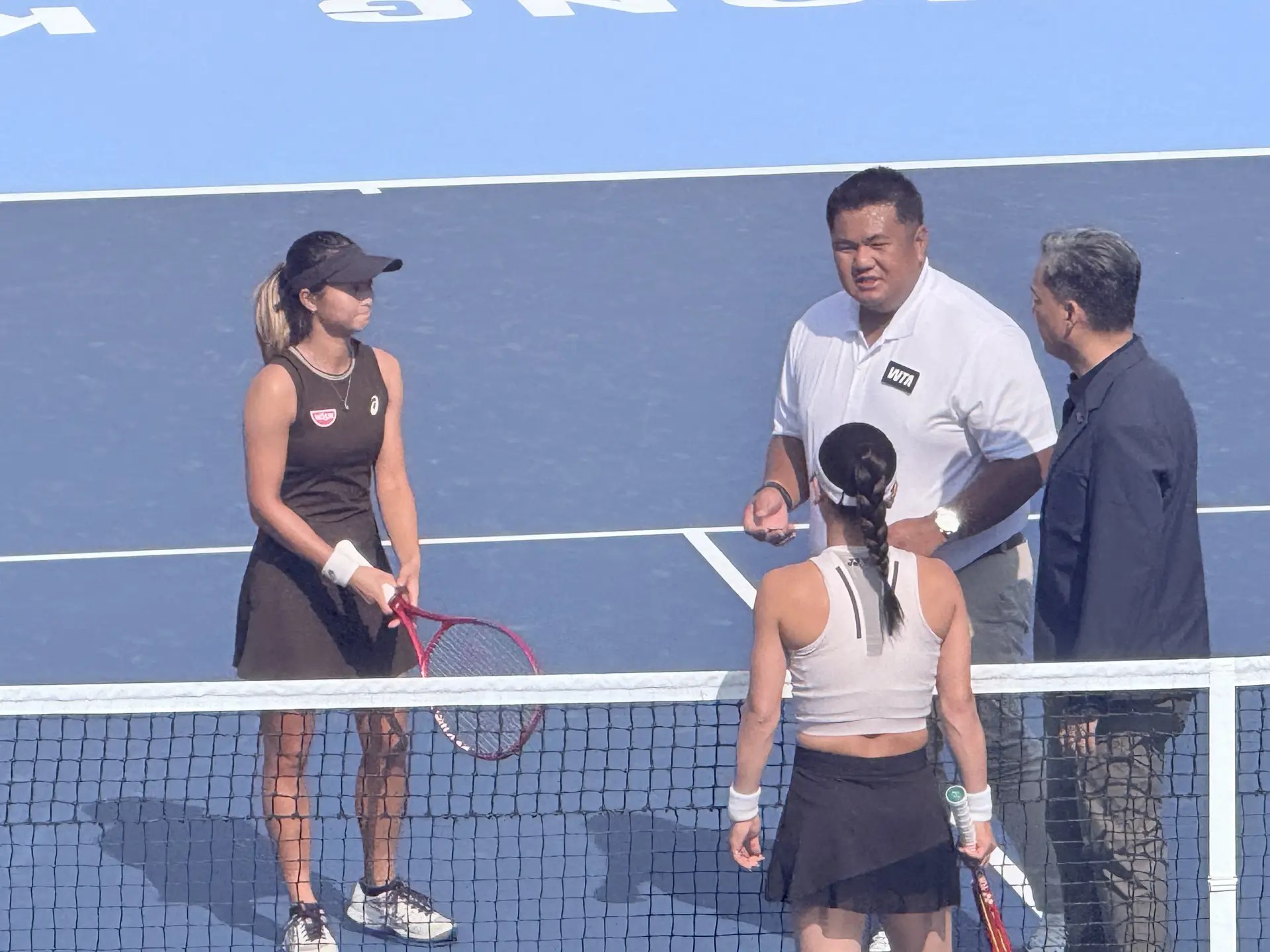
Sakatsume went ahead 4-3 in the first set, and Cody Wong Hong-yi levelled at 4-4, but Sakatsume took the set and won 6-4, 6-2, converting five of her eight break points, according to the official match statistics.
Some audience left after that match. Those who stayed found their voice. Yandy Shek Cheuk-ying, 21, playing her first Women’s Tennis Association (WTA) Tour match, trailed top seed Aliaksandra Sasnovich early in the first set before closing to 4-5, as the stands cheered every point. Sasnovich, a former world No. 29, held on to win 6-4, 6-2.
Hong Kong tennis is having its best year. Coleman Wong won Asian Games singles gold, and the sport has kept its top-tier government funding for another four years, the South China Morning Post reported. But outside the stadium, ordinary players face a different contest. Hong Kong’s public tennis courts were in use 87% of the time in 2025, up from 80% a year earlier, according to the Leisure and Cultural Services Department.
The WTA event brings world-class players to a public court. The question is whether the city’s tennis boom reaches the people who struggle to book one.
Home players, one empty seat
Hong Kong’s best-known female player is missing. Eudice Chong, ranked 60th in the world in doubles, withdrew because of injury on Oct. 29, Now News reported. Chong, who became the first Hong Kong player to win a WTA Tour doubles title in May, according to RTHK, said in a statement that this had been “the best season of my career.” Before the tournament, she said Europe had a stronger tennis culture than Hong Kong. “People respect you as an athlete, and there are enough courts to train on,” she told Wen Wei Po in Chinese.
Cody Wong Hong-yi, Shek and Vienna Lai Ching-laam all drew seeded opponents in qualifying, according to Now Sports. Shek was making her WTA Tour debut, while Cody Wong Hong-yi, 24, had played the event seven times before, the Hong Kong Economic Times reported. Hong Kong still has players in the main draw. Adithya Karunaratne, 24, has a singles wildcard, while Cody Wong Hong-yi and Shek will play doubles, according to Wen Wei Po.
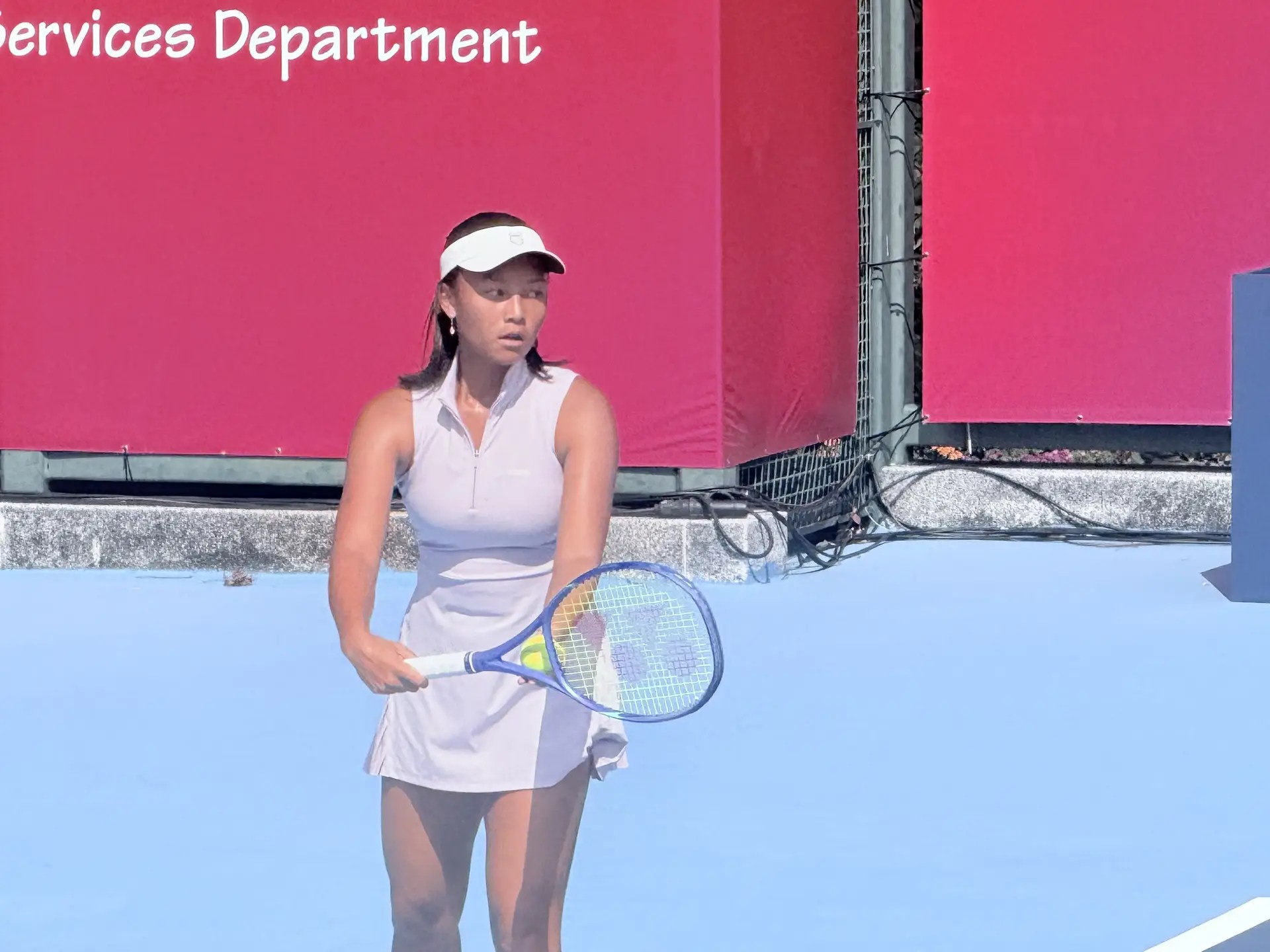
Lai, 19, the youngest of the three, first learned the game from her father and later received a scholarship to train at a private academy, Wen Wei Po reported in 2023. The report noted that the cost of courts and equipment keeps many children from low-income families away from the sport.
Two free days at Victoria Park
The Hong Kong Tennis Open, a WTA 250 event, runs from Oct. 31 to Nov. 8 at Victoria Park Tennis Stadium in Causeway Bay, with the singles and doubles finals on Nov. 8. Entry to qualifying on Oct. 31 and Nov. 1 is free. From Nov. 2, when the main draw begins, tickets cost HK$180 to HK$1,070, according to the Hong Kong Jockey Club, the tournament’s community partner. The paying week brings the big names, including Alexandra Eala of the Philippines and seven-time Grand Slam singles champion Venus Williams, the South China Morning Post reported.
The free morning drew a mostly older crowd, with few families in the stands.
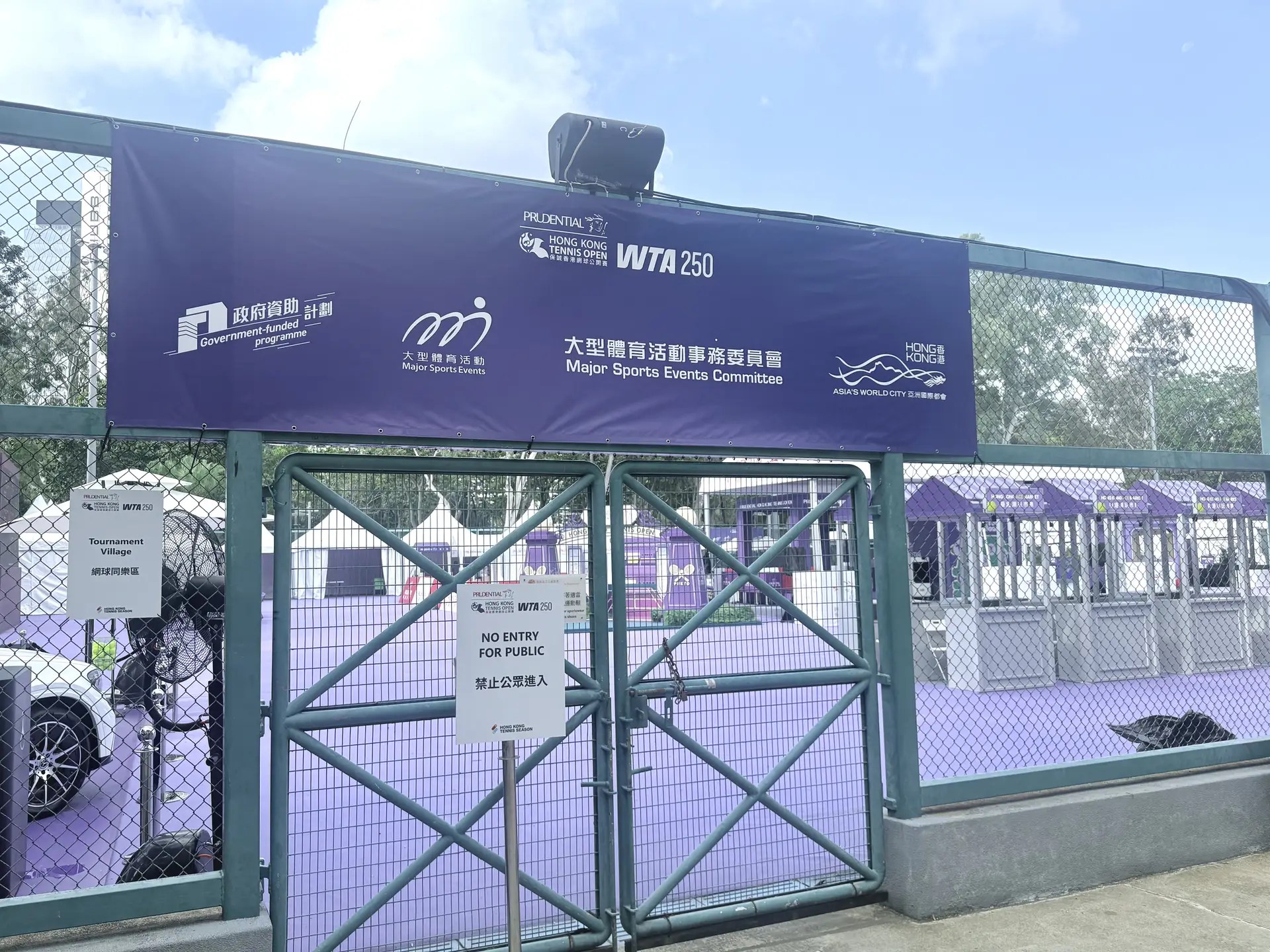
Outside the stadium, a Tournament Village with games, food stalls and live match screens is free to enter during the tournament, Wen Wei Po reported. On the first free day, however, a sign on its gate read “No entry for public.” When Shroffed left shortly after 2 p.m., only members of the press were seen inside.
Betty Cheung, who declined to give her age, came with her racket bag and tennis kit, ready to play after the match. “I only play on weekends, but I like tennis and I want to support the Hong Kong team, so I came to watch,” Cheung said in Cantonese. She noticed many newcomers. “There are quite a few people here today who don’t usually play,” she said. “Sometimes they clap when they shouldn’t.”
Cheng Li, a retiree who now lives in Hong Kong, came with his wife for the same reason. “It’s free today, so I came along with my wife to have a look,” Li said in Mandarin. “Old bones like ours can only watch to pass the time.”
The 7 a.m. race
Victoria Park’s centre court is itself a public venue that residents can normally book through the department’s SmartPLAY system, according to SmartPLAY.
Booking opens at 7 a.m. each day for the following week. The department calls 7 a.m. to 7:15 a.m. the “peak booking window for ordinary users,” and also the time when touts most often use automated tools, according to news.gov.hk. Since July 7, users who log in with the government’s iAM Smart digital ID get first access.
The courts themselves are cheap. An outdoor floodlit court in the urban area costs HK$57 an hour, according to the department’s price list. The hard part is getting one.

For regular players, the scramble is routine. “It depends on the time and the location,” Cheung said of public courts. “Weekday evenings after work are definitely prime time. If you really want to play, you pick a less popular place.”
“Fighting for a court at 7 a.m. isn’t new,” she said. “But you can still pick up cancellations. If I get one, I play. If not, I have a meal with my tennis friends.” She has not been pushed into private clubs. “Public courts are really cheap,” she said. “These days it’s all about value for money.”
The stadium itself may change. Chief Executive John Lee said in his September Policy Address that the government would explore redeveloping the 3,600-seat centre court into an “iconic all-weather, multi-purpose venue,” RTHK reported.
Why the courts matter
The pressure on courts comes as health officials push Hongkongers to move more. More than 90% of primary and secondary students said they did not meet the recommended 60 minutes of moderate to vigorous activity a day, according to the Centre for Health Protection. Among adults, 14.8% did not get the exercise recommended by the World Health Organization in 2023, according to the Department of Health.
Not every fan sees the courts as a way to stay active. Li does not book them. “We wouldn’t go out of our way to book one,” he said. “A walk is usually enough for us.” For some families, booking is a hurdle in itself. Simpson Wong, a retiree, brought his grandson, a primary school pupil who attends tennis training classes. “I brought him to encourage him to keep working hard at tennis,” Simpson Wong said in Cantonese.
But the family seldom books public courts. “Kids have so much to do. They don’t have time to practise much on their own, so we don’t book many government courts,” he said. The online booking is left to someone else. “I don’t deal with these electronic things,” he said. “I leave it to his dad.”
After match point
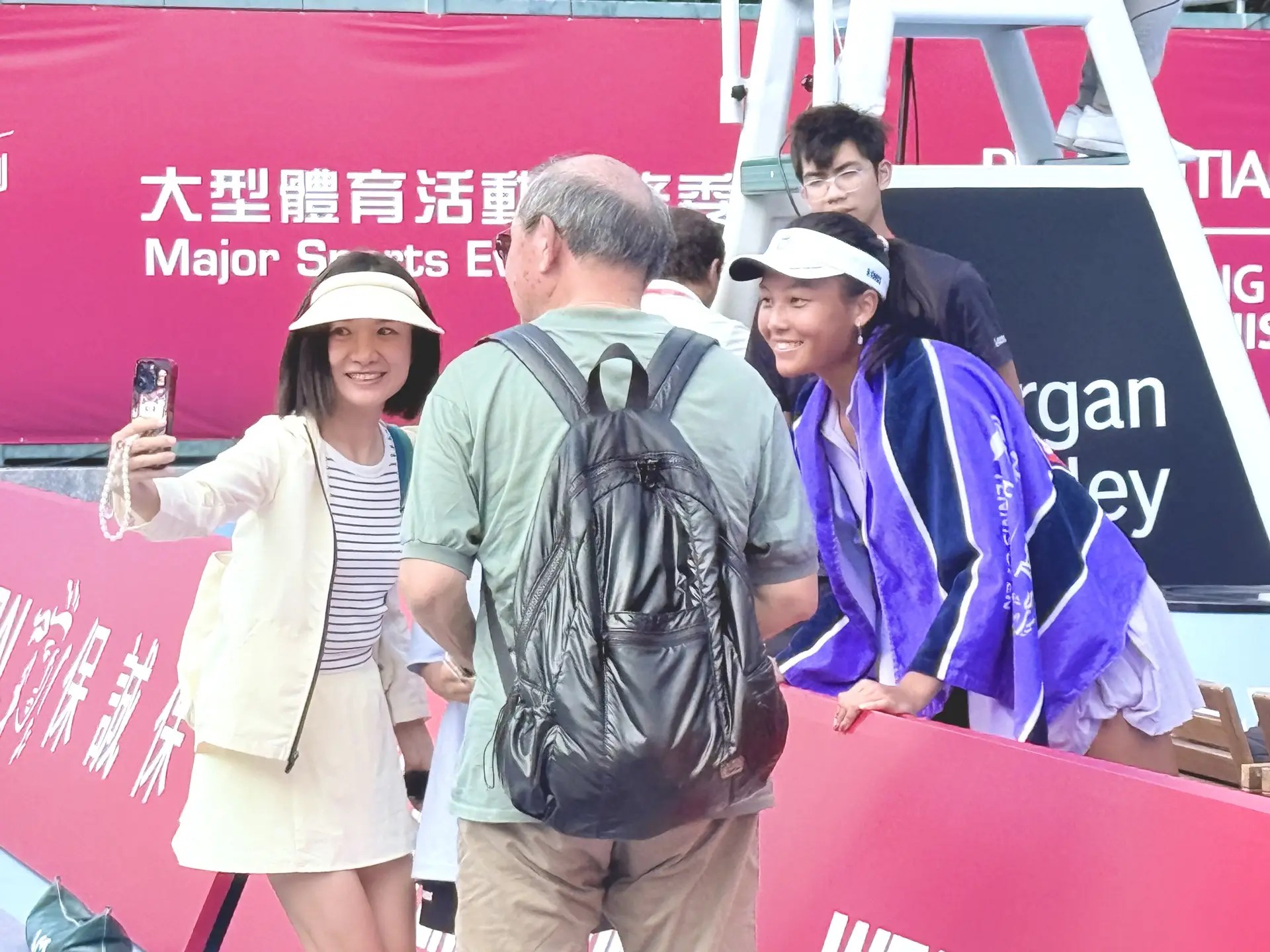
On Court 1, an uncovered side court, Lai faced sixth seed Carol Young Suh Lee of the United States, ranked 156th in the world. The scoreboard showed the gap. Carol Young Suh Lee won 6-1, 6-2, taking 90% of the points on her first serve, according to the official match statistics.
But the fans in the open-air seats clapped every point Lai won, and some kept shouting “Add oil.” When it was over, Lai stayed. She posed for photos with fans, and children lined up for her autograph.
From Nov. 2, the stars arrive and the free seats are gone. After that, Victoria Park’s courts go back to whoever wakes up first at 7 a.m.