

During the National Day Golden Week, the mainland milk tea brand CHAGEE officially launched its first store in Hong Kong, accompanied by a series of pop-up events.
Located in the K11 mall, CHAGEE’s store is in close proximity to other major mainland milk tea brands like Hey Tea and Naixue, leading Hong Kong media to comment on the intensifying competition.
A CHAGEE employee told Shroffed that in the first three days of opening, the store sold at least over 10,000 cups. When asked if the Naixue next door had been impacted, a Naixue employee declined to comment on site, and a message sent to the manager later received no response.
The price of CHAGEE’s milk tea products in Hong Kong ranges from HK$28 to HK$34, slightly higher than that in mainland China. According to Shroffed’s previous reporting, long queues have formed since the opening, with an average wait time of three hours.
Elise Yan, a local high school student, said she “definitely prefers CHAGEE” over other well-established brands in Hong Kong like Kung Fu Tea, ShareTea, and Gong Cha.
“CHAGEE feels fresher, the tea flavor is stronger, and they don’t use non-dairy creamers. Although it’s more expensive here than in the mainland, I don’t mind the small price difference for the taste,” said Yan.


Hong Kongers Heading North: A Choice of Cost-effectiveness
Since the full reopening of the border between Hong Kong and mainland China in February last year, it has become increasingly common for Hong Kong residents to travel north to shop and dine has become increasingly common.
According to data from the Hong Kong Immigration Department, as of December 30, 2023, 40 million Hong Kong residents had crossed into Shenzhen via the Hong Kong-Shenzhen border. Conversely, 26.54 million mainland visitors traveled to Hong Kong in the same year.
A driver from Shenzhen’s Futian district, surnamed Cheng, said he has seen an influx of Hong Kong customers in recent months. “Many of them come straight to the shopping malls from the metro station. It’s great to see them praising Shenzhen’s rapid development—it makes me proud!”
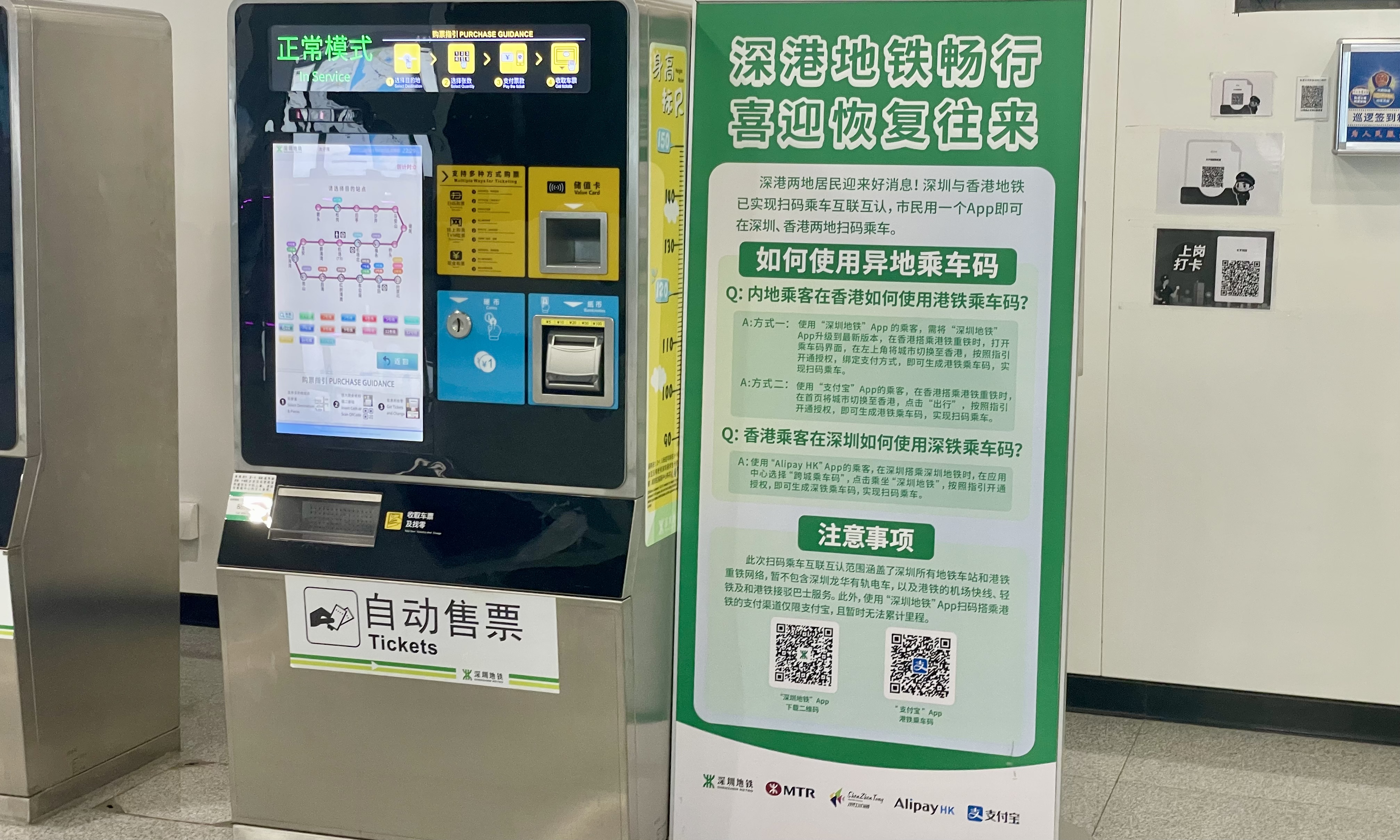
Yan also frequently visits Shenzhen with friends and got to know mainland milk tea brands after the border reopening. She explained, “Whenever I have free time on the weekends, I go with friends mainly to sing karaoke and try local snacks.” The relaxed lifestyle in Shenzhen is one of the things she enjoys the most compared to Hong Kong.
Jacqueline Wang, a fourth-year university student who recently stayed in Shenzhen for three nights, agreed. “They (KTVs in Hong Kong) feature outdated equipment, small spaces, and poor service. In contrast, mainland KTVs offer free snacks, frequent discounts, and the option to select songs via mobile apps. It’s a much better experience.”
Wang said she often travels to Shenzhen for better cost-effectiveness. “For the same price, you can dine at a higher-end restaurant in Shenzhen with better service, so the overall experience is superior.” She hopes more mainland dining chains with excellent service will expand into Hong Kong.
Mainland Brands Heading South: Go-to-Market or Go Bust?
“Go-to-market” is never a new concept for mainland brands, but it has intensified in the past year.
Numerous mainland coffee and tea brands like Manner Coffee, Mixue, JO’s Cha, and LMM Hand Crashed Lemon Tea have opened in popular Hong Kong areas like Tsim Sha Tsui and Mong Kok. Well-known mainland restaurants such as Green Tea Restaurant, TAI ER, and Xita Old Lady Barbecue have also ventured into Hong Kong’s major shopping centers.
According to the data from OpenRice, since mid-2022, no less than 40 mainland restaurant chains have entered Hong Kong, opening more than 100 stores offering a variety of cuisines, including hotpot, Chinese dishes, Korean BBQ, cafes, and bakeries.
It is worth noting that alongside the physical restaurant industry, online delivery platforms have been expanding rapidly in Hong Kong and overseas. According to the data from Measurable AI, Meituan’s food delivery platform KeeTa, which entered the Hong Kong market in May last year, became the leading food delivery service by March 2023, with a 43% market share by online food delivery order.
An industry analyst, who requested to stay anonymous, said, “The mainland consumer market is too competitive, but overseas markets offer more growth potential.”
He emphasized that while mainland restaurant expansion abroad is still in its early stages, there is significant room for growth, which is why companies are aggressively expanding and even pursuing to be publicly listed in Hong Kong.
Mainland brands often follow a three-step strategy when expanding: Hong Kong and Macau first, followed by Southeast Asia, and then North America or other regions. Securing a foothold in Hong Kong is crucial, but adapting to local market demands, business models, and food preferences will be a long-term challenge.
The onsite manager at a Coucou Hot Pot in Tsim Sha Tsui, surnamed Lam, mentioned that it’s a misconception that mainland brands are only popular with local residents or mainland tourists.
She noted that as Hong Kong recovers from the pandemic, their chain stores “have seen a huge increase in customers speaking Japanese, Korean, and Thai.”
Due to its cultural similarities with the mainland but its higher level of international exposure, Hong Kong serves as a testing ground for mainland brands to adjust to different cultures, consumption habits, and safety regulations.
Not a “Copy-N-Paste” Business
Not all mainland brands thrive in Hong Kong. Mixue for instance, known for its rapid expansion, faces the challenge of Hong Kong’s high fixed costs.
Renting a shop next to Mixue’s first store in the Bank Center Plaza costs about HK$200,000 per month for a 412-square-foot space. If Mixue pays a similar amount, to cover rent alone, they would need to sell 20,000 cups of tea each month at HK$10 per cup.
This doesn’t include the higher labor costs in Hong Kong, where store managers earn between HK$15,000 and HK$22,000 per month, and part-time staff are paid HK$50-60 per hour according to a job description released by the brand. Given these high costs, Mixue’s profit margins in Hong Kong remain quite limited.
Similarly, LMM Hand Crashed Lemon Tea rented a ground-floor shop on Nathan Road for HK$70,000 per month, with the lease running until April 2025. However, due to underwhelming performance since its opening, the store vacated the space early in June 2024.
The brand once explained on Xiaohongshu that its store in Hong Kong incurs an estimated monthly rent of HK$36,000 to HK$130,000, with renovation costs ranging from HK$150,000 to HK$250,000. In terms of labor, with three employees per store, monthly staffing expenses amount to HK$60,000 to HK$80,000.
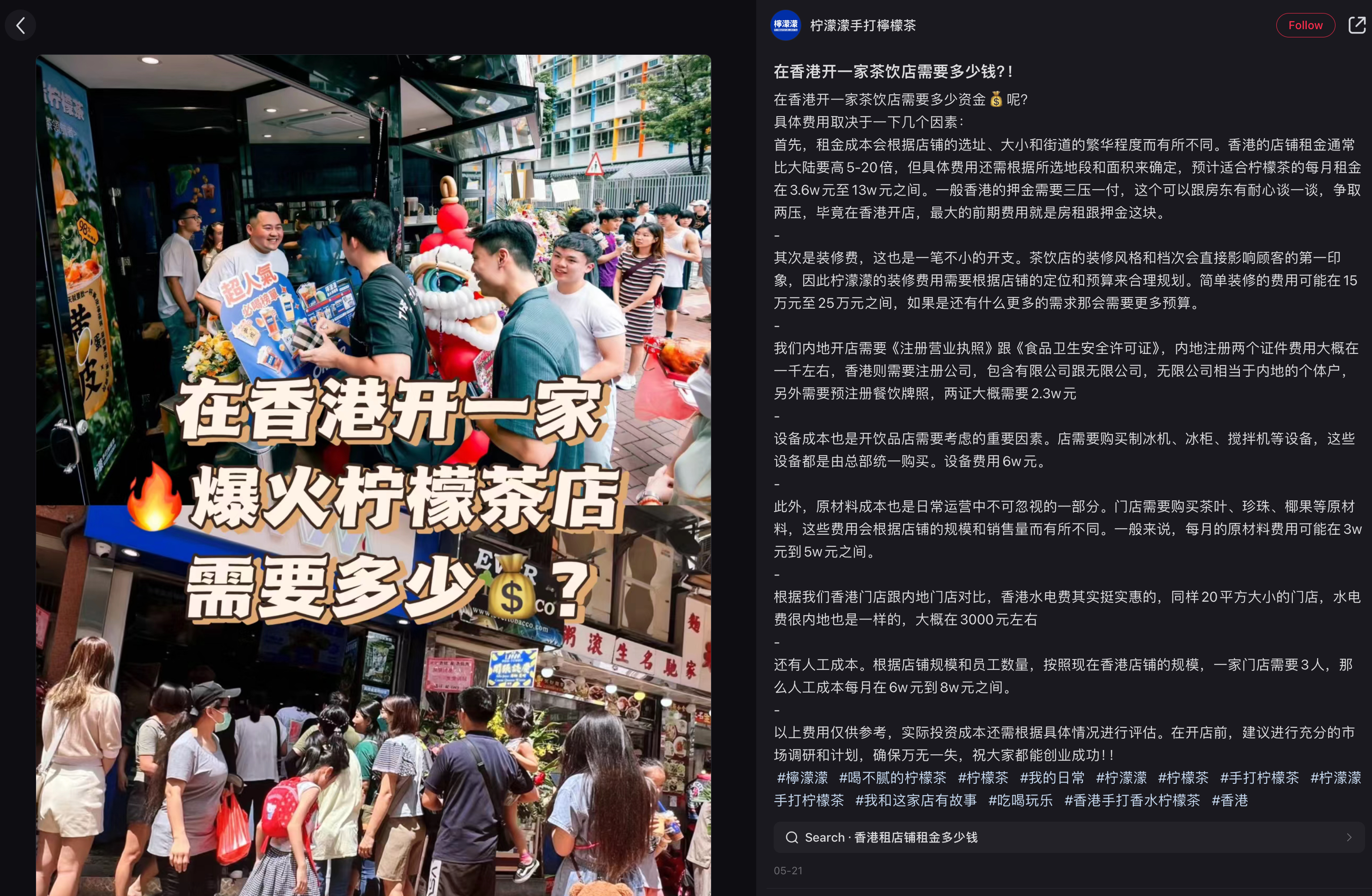
The high cost of opening stores in Hong Kong, coupled with a limited market capacity, makes it difficult for mainland tea brands to rely on economies of scale to improve overall performance.
Hey Tea, which entered Hong Kong in 2018, experienced a long period of contraction before resuming store openings in 2023, with only six stores in the city. Naixue, which opened its first store in Hong Kong in 2019, closed its flagship location at The Peak this July without notice, leaving the only and last one in K11.

What’s Next for Hong Kong’s Economy?
Despite the challenges, capturing the Hong Kong market is crucial not only for fulfilling the global aspirations of mainland brands, but also for breathing life into Hong Kong’s struggling economy.
Kevin Yap, a retired investment director with decades of experience straddling both Hong Kong and Shenzhen, observed that Hong Kong residents have long ventured north in search of more affordable options. However, what makes this trend stand out today is the significant improvement in both the quality and service levels offered in Shenzhen.
“In the past, the focus was purely on lower prices, but now Shenzhen’s superior service and product creativity often surpass what’s available in Hong Kong,” said Yap.
Since the pandemic, Hong Kong’s tourism industry has struggled to return to pre-pandemic levels, and the local restaurant scene has faced similar challenges. According to the data from OpenRice, 945 restaurants shut down between July and September 2024 alone.
With Hong Kong’s economy remaining sluggish and more residents choosing to spend across the border, Yap expressed his hope that mainland brands could play a pivotal role in revitalizing the city.
“While it may be cheaper for individuals to shop and dine in Shenzhen, this trend doesn’t benefit Hong Kong’s economy. I’d much prefer to see mainland brands invigorate the local market and inject fresh energy into Hong Kong,” said Yap.