

When desks hover mid-air, chairs turn into mechanical spines, and printers twist like creatures, this is not a scene from a sci-fi film, but The Lurking Void, the latest exhibition by Hong Kong artist Phoebe Hui.
Presented at the HKADC SHOWCASE from 21 March to 19 April 2026, the exhibition responds to the rapidly evolving relationship between artificial intelligence and human society. Public tours are available every Saturday, led by docents.
Hui chose the office as her creative setting because it is “a familiar environment that resonates with most people.” Here, AI does not simply replace humans. Instead, it transforms the very nature of labour. People are neither erased nor fully in control, but caught in a deep, tangled embrace with machines.

One of the most striking works is Vertebrate. This dynamic installation is made from stacked and reconfigured office chairs. Stretching 41 metres in length and standing five metres tall, it resembles a mechanical beast carefully raised into existence.
Chair parts are gradually replaced by cables, wires, and mechanical structures, shifting from “human support” to “machine logic.” At its end, a set of T8 fluorescent tubes forms a cold, rhythmically pulsing head. The slow throb suggests a machine that exists merely to keep running — not to achieve anything new.


Hui extends this reimagining of office furniture across the exhibition. Floating Office suspends desks above the ground, stripping them of their original function. The work hints at the loosening of structure and purpose in the modern workplace. Another piece, Endless Shift, features a continuously rotating office chair base — a quiet symbol of unending duty and cyclical labour time.
During an artist tour and sharing session on 11 April, Hui was joined by guest speaker Dickson Yuen, a former artist at TV Most, for an on-stage dialogue. The two explored the ideas behind the works from different perspectives.
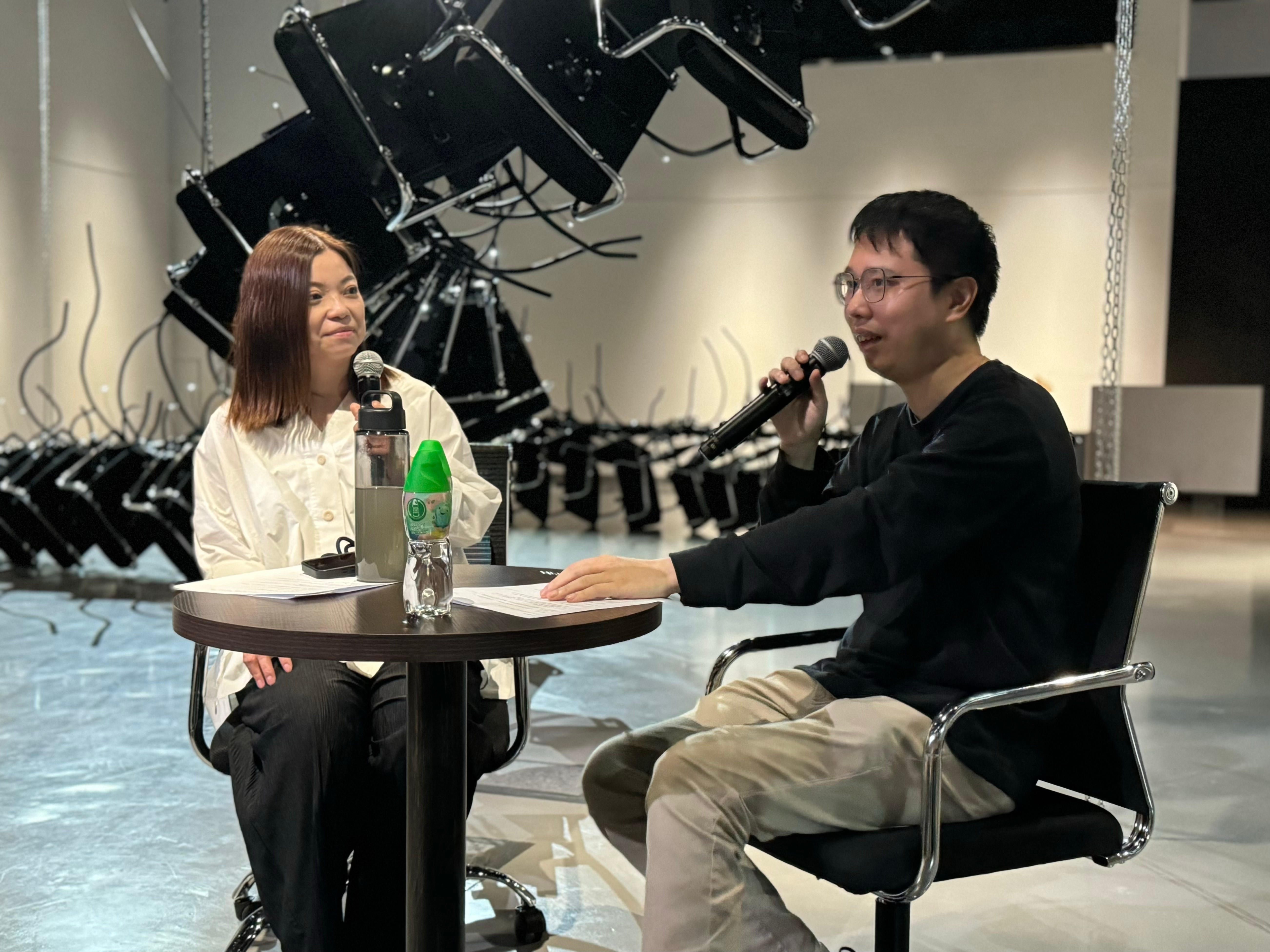
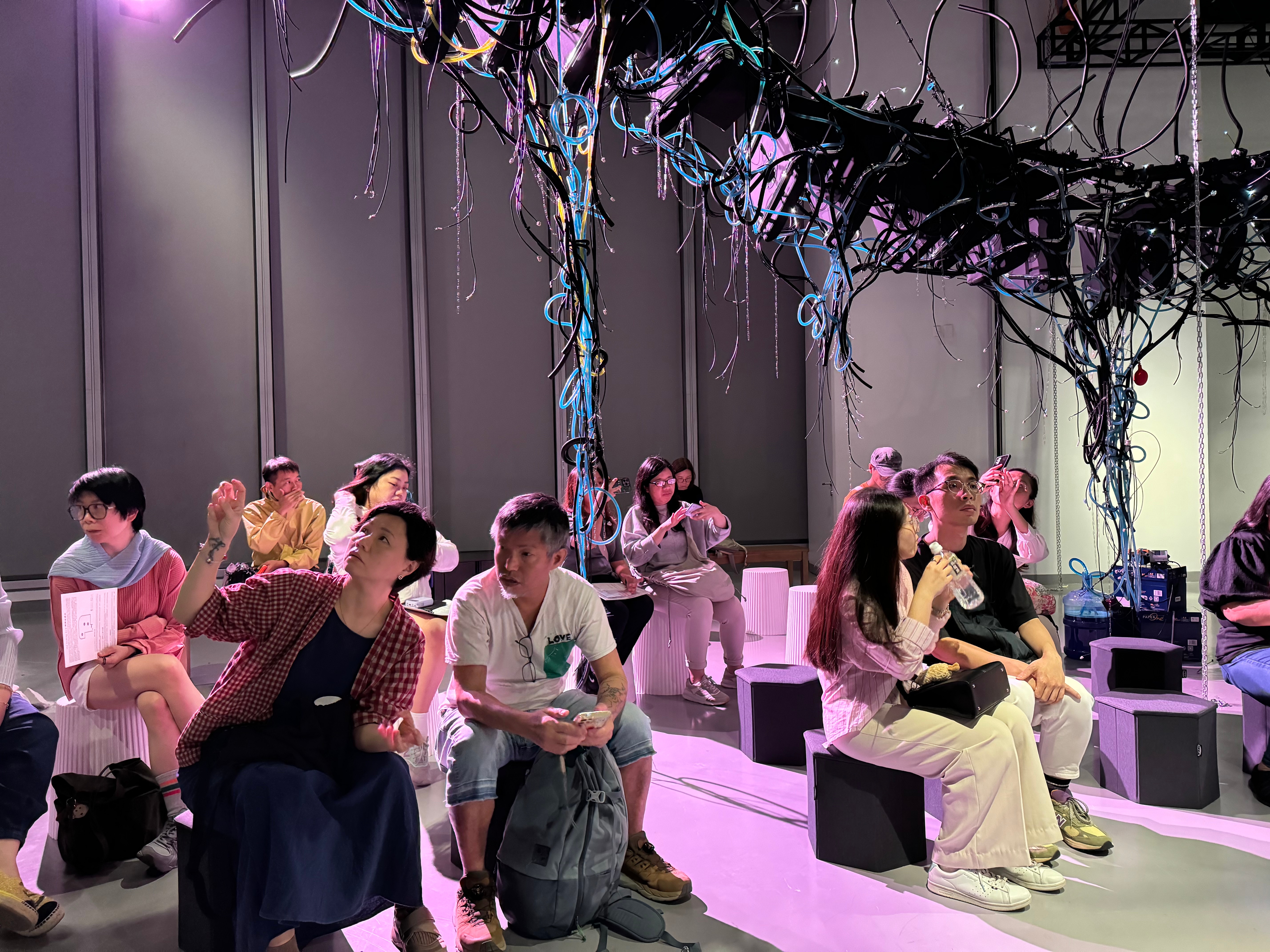
“I used to worry that AI would take something away from creators like me,” Yuen admitted. “But over time, I came to realize that audiences don’t just want to look at a piece of work. They want to have a spiritual conversation with the person who made it. And that’s something AI just can’t do.”
Hui, meanwhile, sees AI as a “collaborative partner” worth experimenting with. “The English title The Lurking Void is inspired by H. P. Lovecraft’s novel The Lurking Fear,” she revealed. “And the Chinese title was chosen from a list of options that AI generated for me.”
Audience reactions have been equally profound. “I was stunned the first time I saw this work,” said Amber Zou, a student from Hong Kong Metropolitan University. “The artist put so many clever little touches into it. The wires and tubes are yellow and blue, just like the ballpoint pens and highlighters we use every day in the office.”

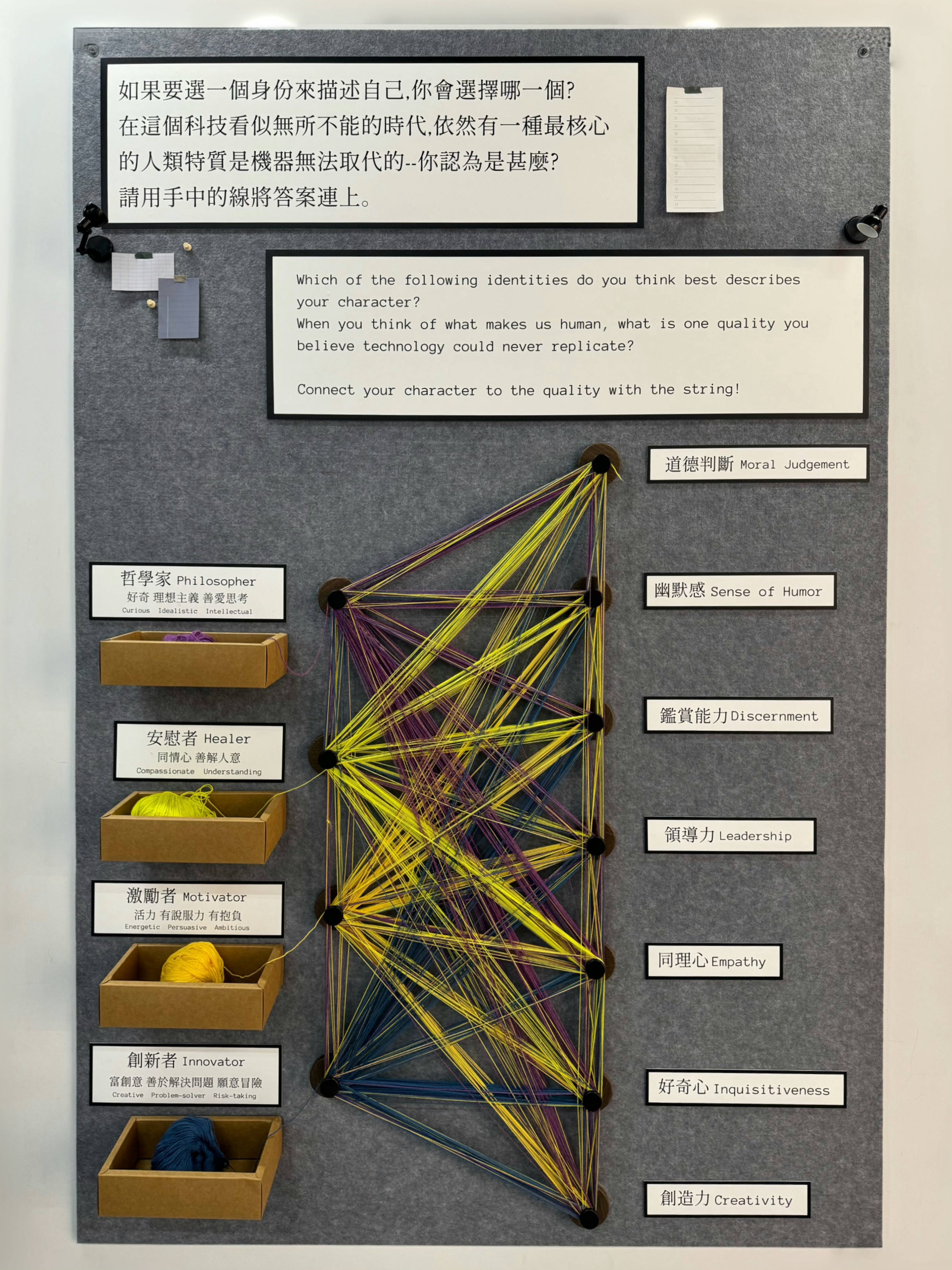
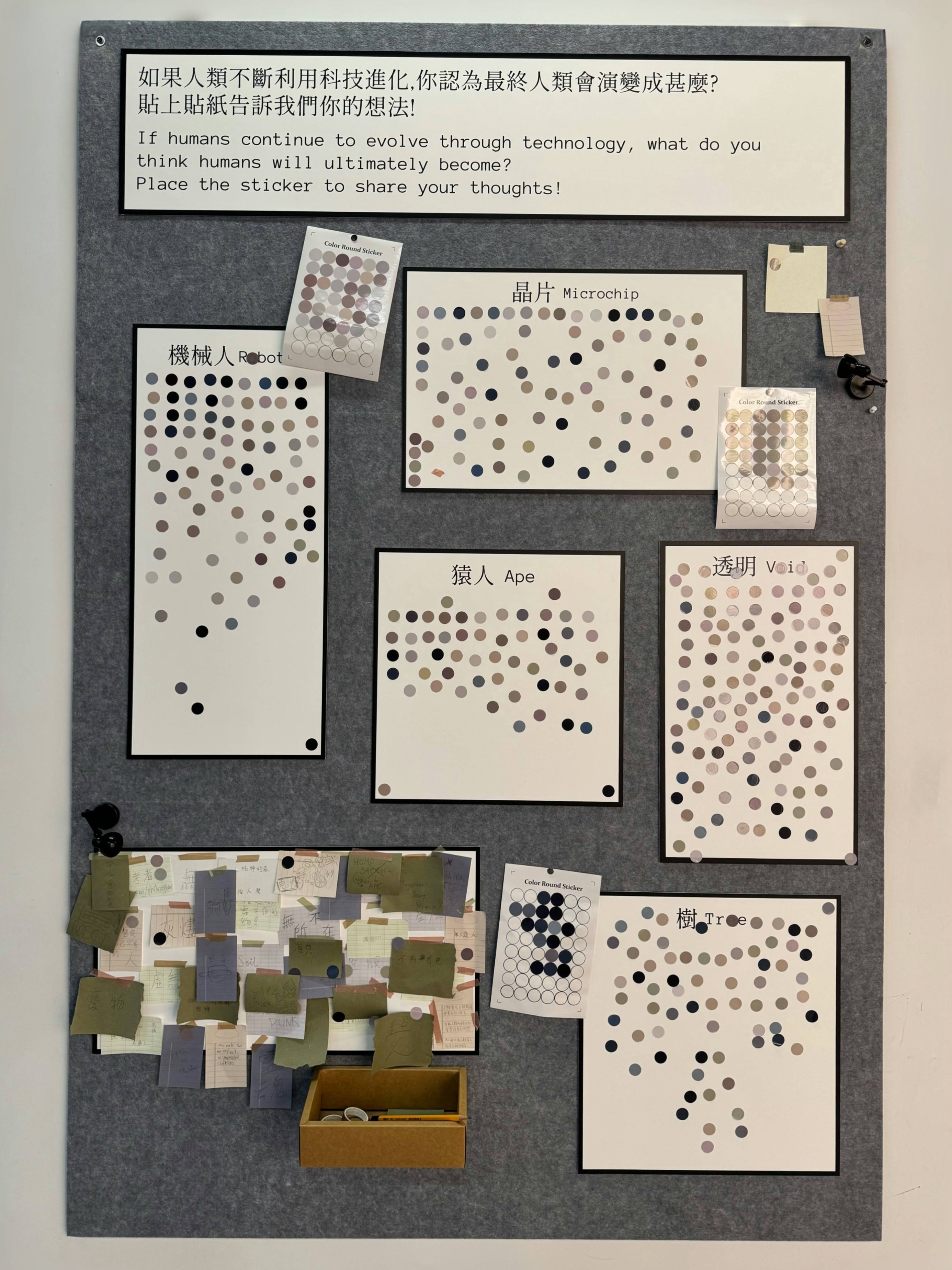
The exhibition’s interactive message wall has become another focal point for collective reflection. Printed on the wall are two questions: “If humans continue to evolve using technology, what do you think humans will ultimately become?” and “What is one quality you believe technology could never replicate?”
In an era when the boundary between AI and humanity is growing fainter, The Lurking Void creates a much-needed space for these important questions — and turns every visitor’s response into part of the exhibition itself.