

On a Friday afternoon, Central Market was anything but empty. The landmark in the heart of Hong Kong’s financial district draws a steady stream of pedestrians, tourists, and office workers.
Yet among the dozen or so stalls at the second Hong Kong CeraMarket, titled “Floral Whispers,” only about five made passersby stop and look. The rest were largely ignored.
The exhibition, held from April 1 to 14, occupies two spaces inside the 1939-built market, which reopened in 2021 after renovation.
Before:
The interior of Central Market in Hong Kong during the 1980s, featuring an escalator and an old textured wall. Photo courtesy of Hong Kong Through the Lens.
After:
A view of the escalator and interior of Central Market in Hong Kong after its revitalization, shot from a similar angle as the 1980s photograph, on April 10, 2026. Photo by Chen Meiyi.

Few stops, even fewer purchases
Of those who did stop, older visitors, both local and foreign, tended to stay the longest, bending down to examine details or discussing pieces with companions. Younger visitors were present but moved faster.


Prices were a common barrier. A small ceramic piece, a cup or a small bowl, often costs HK$200 (about US$26) or more. For most pedestrians who happened to pass by, the price appeared to keep interest from turning into a purchase.

The downstairs atrium faced a different challenge. Surrounded by restaurants, the exhibition space was consistently interrupted by the noise of diners and kitchen activity. Only deeper inside the display area did the volume drop.

‘It has a sense of flow.’
Liu Hanna, a visitor who makes ceramics herself, learned about the exhibition from Instagram. She stopped longest in front of a piece by Ng Ka Ho titled “The 64 Hexagrams: Before Completion.”


Liu said, “I like its form. It feels rough and wild. The curves and colors have a sense of flow.”
The artist’s statement describes the work as “water, fire, clay, and flower, existing at the intersection of human imagination and natural phenomenon.”
Liu said she appreciated how Central Market divided the two spaces. “Upstairs is for selling, more functional, everyday ware,” she said. “Downstairs is the exhibition area, more artistic. Two spaces for different kinds of products.” But she did not buy anything.
‘It feels more mature than last year.’
At one stall called “Ceramic Planet,” the works looked different. Each piece was shaped like a creature, some with multiple eyes, others with unusual limbs. They were made by people with intellectual disabilities and autism spectrum disorder, based on creatures they had imagined.

Su Liqi, a staff member at the stall, said Central Market had invited different organizations to apply for booth space. “Ceramic Planet” was one of the selected groups. Participating exhibitors were divided into three rounds, she said. Her group was in the second round.
This is the second year of the CeraMarket, Su said. “It feels more mature than last year,” she said. “There is more promotion.”
Sales, she said, were “so-so.” But she noted that many exhibitors had returned for a second year.
‘You never know what the final piece will look like.’
Kalen Cheng, a first-time exhibitor at the fair, makes ceramics by mixing white clay with different colored clays. The colors change unpredictably after firing. Some of her plates have gold edges, which require applying gold first before other glazes.


Cheng is a teacher by day. She has done ceramics as a side job for three years. She was sharing a booth with three other potters, some of whom had more experience and had exhibited at the fair before.
Asked about sales, Cheng said, “More people look. Someone bought yesterday, but most people look.”
The biggest challenge of handmade ceramics, she said, is the unpredictability. “You never know what the final piece will look like,” Cheng said. The failure rate, she added, is high. That might explain the high prices.
The hardest period was when she was learning. But the satisfaction, she said, comes from the transformation. “From a lump of clay to a finished piece, that process itself is the reward.”
Handmade vs. Factory-made
But high production costs and high prices are only half the story. Even if a handmade ceramic cup costs HK$200, a factory-produced cup that looks perfectly fine might cost HK$50 or less. The question is whether consumers can distinguish the difference and are willing to pay for it.
Mass-produced ceramics dominate the market. They are uniform, durable, and cheap. Handmade ceramics are not. Each piece carries the risk of the kiln, the trace of the maker’s hand, and the possibility of imperfection.


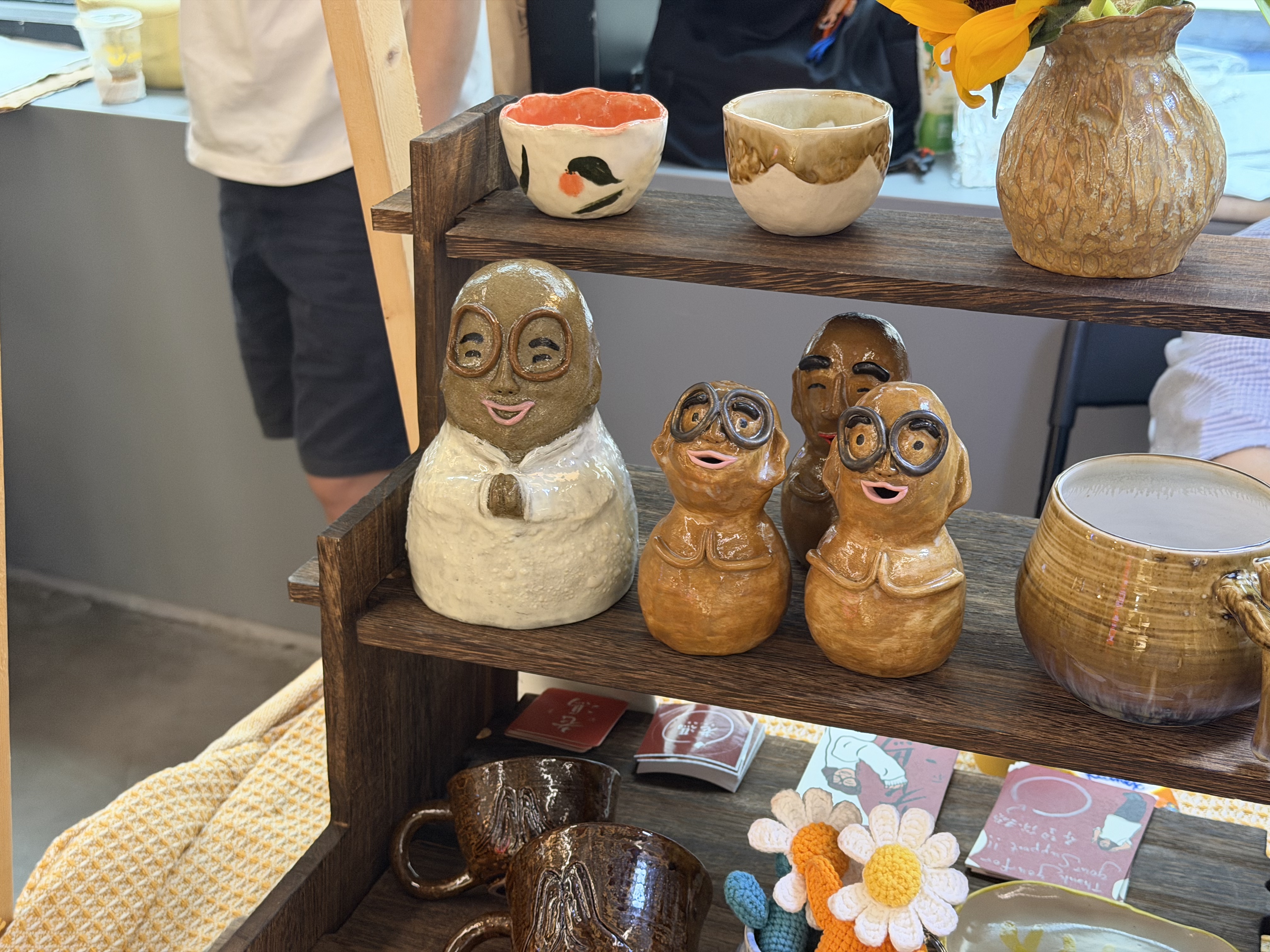
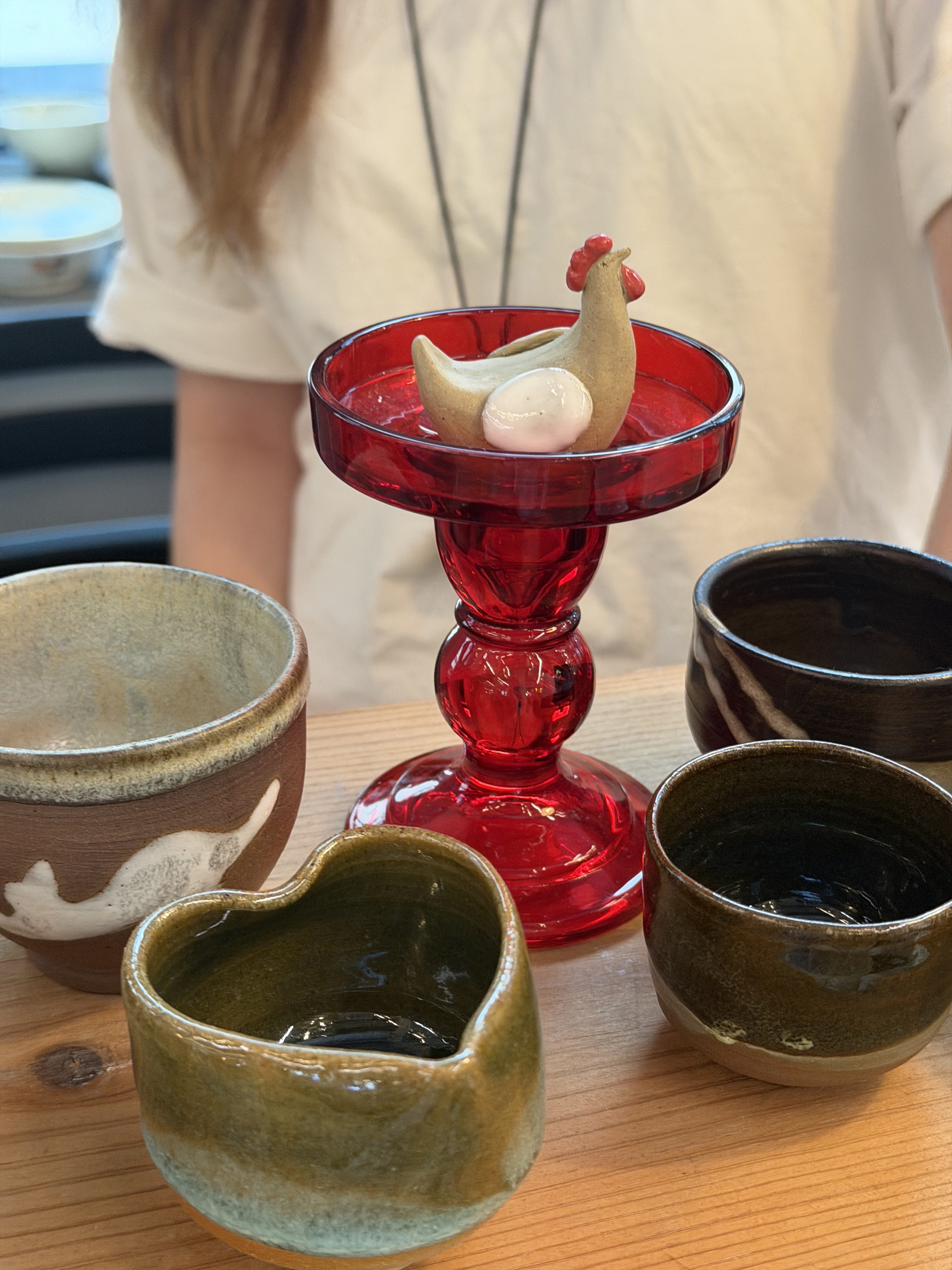
For some visitors at the fair, that difference mattered. For most, it did not. By late afternoon, the upstairs passageway had more walkers than stoppers. The downstairs atrium had fewer visitors overall, and those who came moved slowly through the quieter part of the display, past the noise of the surrounding restaurants.