

The University Museum and Art Gallery (UMAG) at HKU is hosting “Reimagining the Diamond Pine: Ink Art of Wang Xin” exhibition from February 27 to May 24, 2026, displaying ink landscapes inspired by Buddhist philosophy.
Wang Xin, born in Xingtai, Hebei in 1964, is a painter and seal carver who graduated from the Sichuan Academy of Fine Arts. He is currently a teacher of Fine Arts at the Communication University of China, Beijing. His ink works stand out for blending traditional Chinese painting with spiritual comprehension.
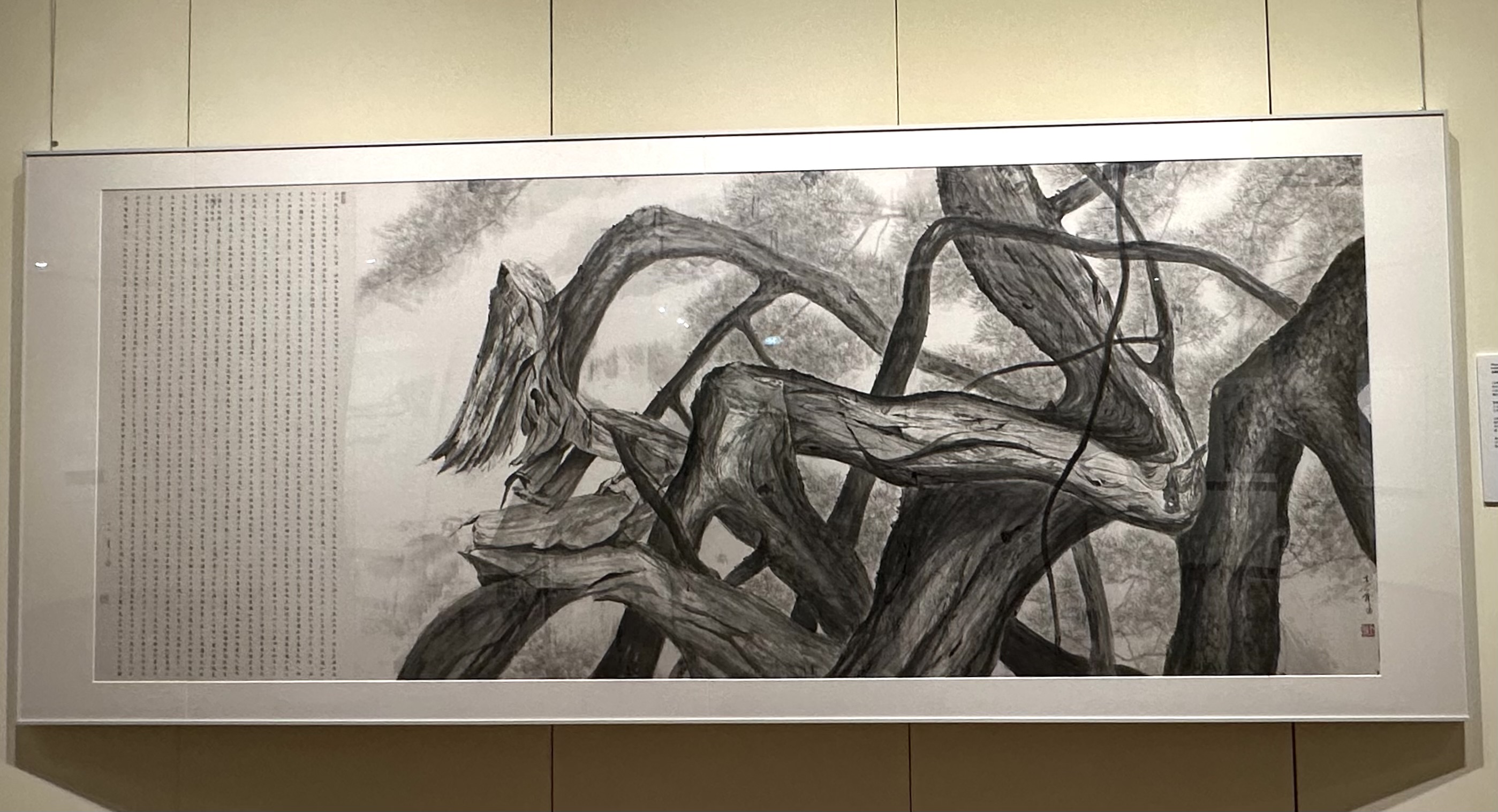
Wang Xin’s exhibition at HKU is not only a visual experience but also a philosophical reflection. Drawing inspiration from the Diamond Sutra, a foundational Buddhist teaching, Wang’s ink paintings of pine trees explore impermanence, emptiness, and resilience. His compositions balance rocks and trees with void spaces. This way, Wang translates meaning through absence, encouraging the viewer to contemplate the art. Furthermore, the calligraphy, as a part of the composition, presents extracts from Diamond Sutra. It is different for each painting and aims to complete their spiritual meanings.
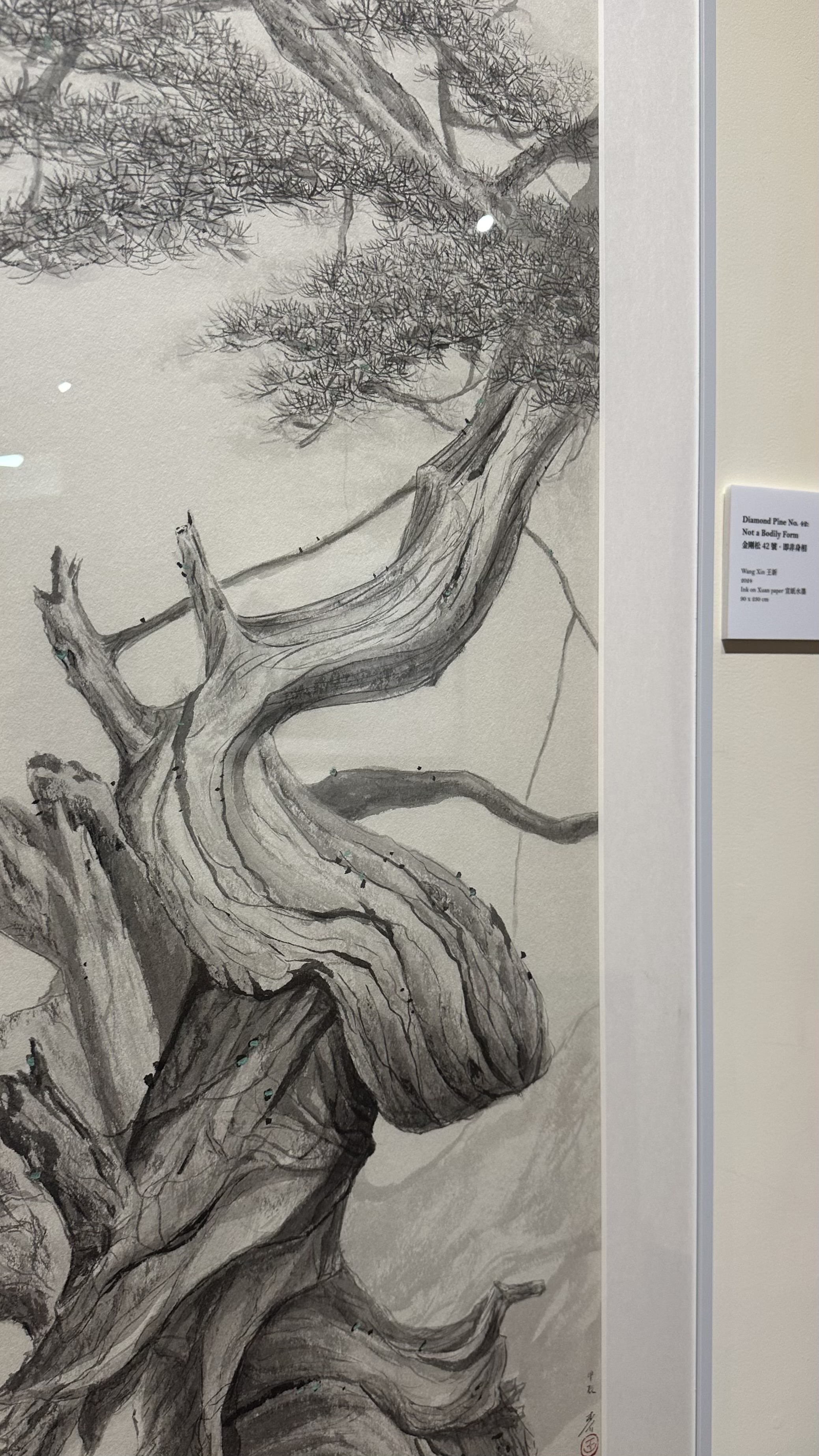
The pine tree, traditionally a symbol of endurance in Chinese culture, becomes a metaphor for peaceful isolation and spiritual strength under Wang’s brush. Achieving personal freedom trough non-attachment is one of his art’s main themes. His brushwork is full of energy but self-controlled at the same time, echoing the paradoxes of Buddhist thought. The result is a series of large-scale ink pieces that convey both visual pleasure and serious meaning.
The F.S Drake Gallery of the museum hosts a series of black and white works on xuan paper, or “rice paper”, known for its longevity and high-absorbance — characteristics that make it perfect for ink. The paintings picture twisted pine trunks, flowing branches, and delicate small-sized calligraphy. One piece, Diamond Pine No. 38, contrasts bent and broken trees with horizontal brushstrokes, creating visual tension and spatial harmony.
Another, Diamond Pine No. 7, pictures an ambiguous tree interweaving, with the passage on time and the scars of endurance going with it. Each painting has an accompanying tablet that explains the philosophy behind the artwork and the techniques the artist uses to convey his ideas.
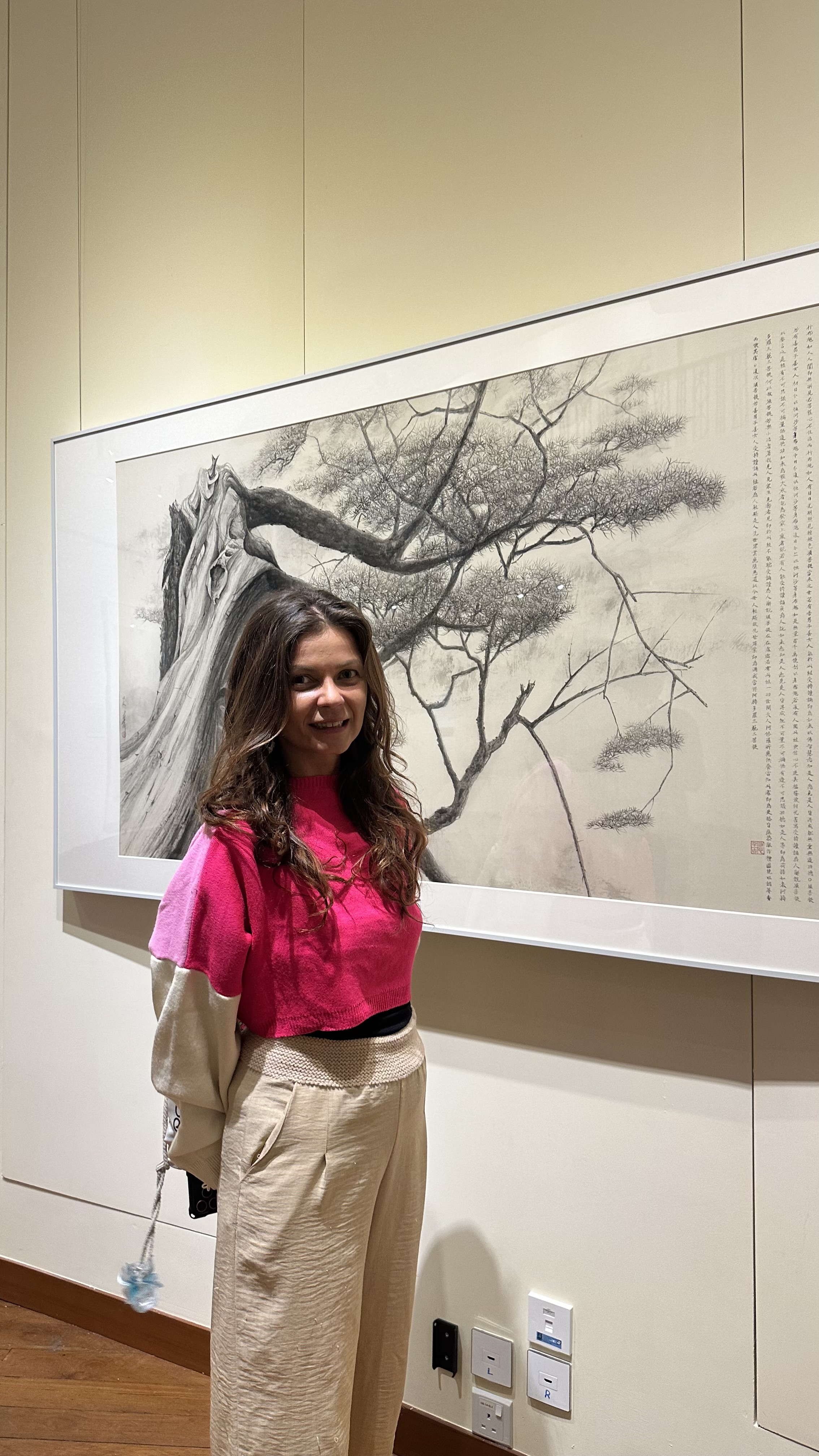
Alina Alexandrovskaya, a 27-year-old tourist, stood quietly before one of the larger pieces. “I think the art translates airiness but strength at the same time,” she said. “Maybe it’s difficult to tell a lot with only black and white, but I think the artist did it great, if that was what he wanted to achieve. I’m impressed.”
Nearby, Huang Ting, 34, admired the calligraphy. “The exhibition is beautiful, and the calligraphy is exquisite. It’s a stunning exhibition with delicate lettering and elegant typography!”
To enrich the experience, UMAG will host guided tours in Mandarin, Cantonese, and English, with the first session scheduled for March 19, 2026. These tours will explore Wang Xin’s artistic techniques, the influence of Buddhist philosophy, and the role of calligraphy in his work. Visitors are encouraged to register early via UMAG’s website, as spaces are limited.
Whether you’re drawn by the ink, the philosophy, or the quiet power of pine trees, Reimagining the Diamond Pine offers a rare chance to see how tradition and personal views of the artist merge in contemporary Chinese art.