

After years of anticipation and construction delays, the East Kowloon Cultural Centre (EKCC) is poised to redefine Hong Kong’s cultural scene with its pioneering focus on Arts Tech – the convergence of arts and technology. As the city’s latest international-level performance venue opens its doors with a three-month opening season featuring 17 programs, it challenges long-held assumptions about the relationship between technology and the arts.
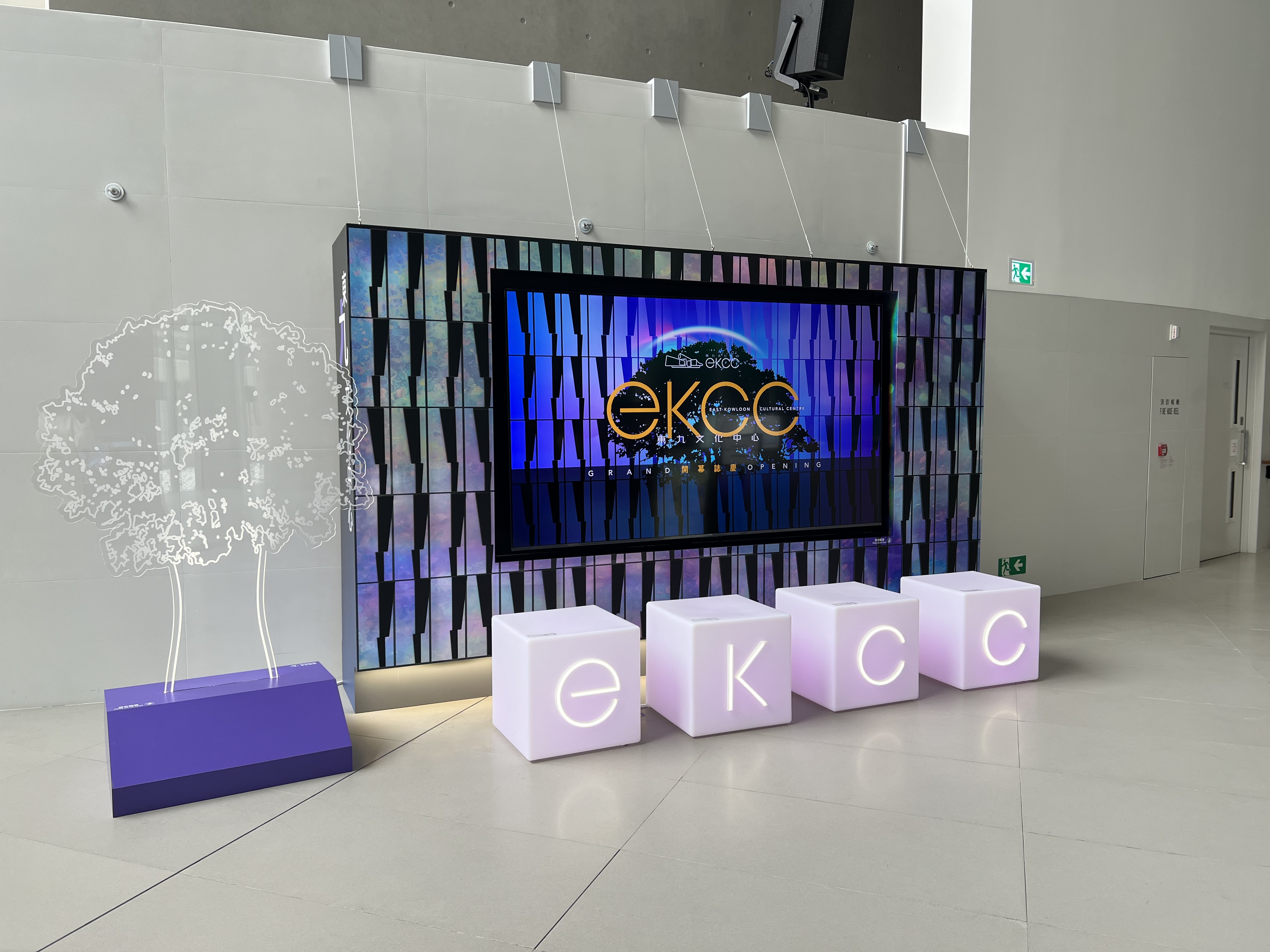
“The EKCC perceives itself as a catalyst for the creative use of technology in stage productions to enhance audience experiences,” explains Betty Au Yuk-fong, assistant director (cultural development) of the Leisure and Cultural Services Department. This HK$4 billion arts complex, built on part of the former Lower Ngau Tau Kok Estate, represents more than just another performance venue – it’s a deliberate shift in how Hong Kong approaches cultural development.
The centre hasn’t waited for its official opening to make an impact. Since August, the “Unbox EKCC” Trial Programme Series has staged around 20 shows, attracting over 13,000 visitors across nearly 500 performances. Among these, the “Lullabies” light installation exhibition drew nearly 10,000 visitors in 370 sessions, demonstrating the public’s appetite for the merge of arts-technology.
Au noted that these exhibitions have “provided much inspiration and could help people from different backgrounds appreciate art technology.” The numbers suggest she’s right – the appetite for this new form of cultural experience is clearly there.
Walking through EKCC’s current exhibitions offers a glimpse into this new paradigm. “Passage of Abundance” by multi-media artist Desmond Leung and producer Thomas Lo transforms The Corner into a virtual oasis where nature and technology intertwine. Using vision-based motion detection, the installation senses visitors’ movements and dynamically transforms them into nature-inspired digital murals in real-time. LED screens blossom with abstract ink art landscape paintings created through visual programming, changing with daylight and accompanied by music composed by Yusuke Hatano.
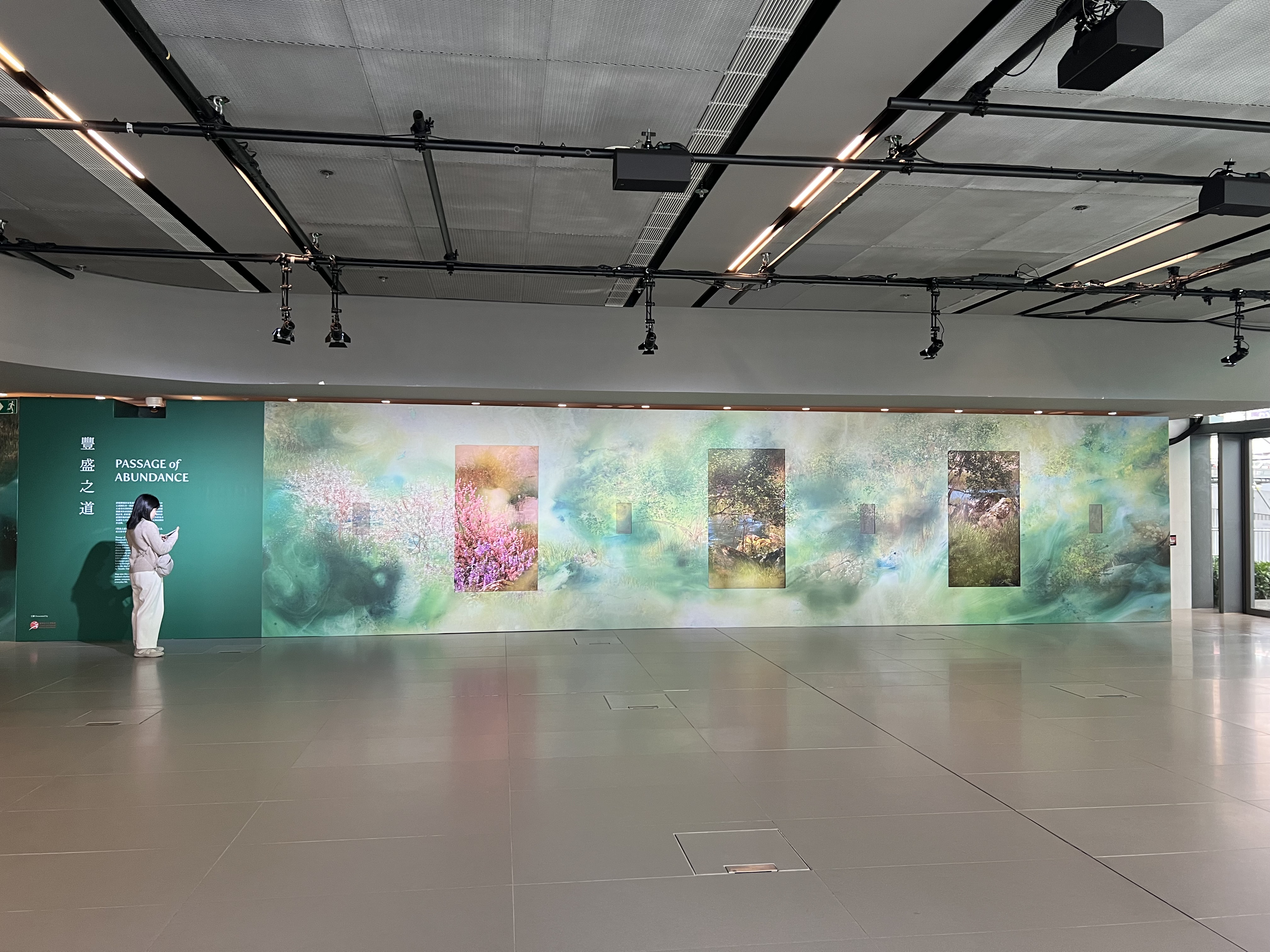
“It feels very immersive with the music, very zen, I enjoyed my time here,” said Chan Pui Fong, a helper at the exhibition, capturing the meditative quality that emerges when technology is wielded with artistic intent.
Meanwhile, “The Tides of Time” by artist Wong Chi-yung offers a more contemplative experience. Inspired by Henry Wadsworth Longfellow’s poem “The Tide Rises, the Tide Falls,” the scenographic installation explores the fundamental nature of time through thousands of fine threads woven into a complex network. The work creates a dream-like space for viewers to contemplate time, memory, and the subtle rhythms of existence.
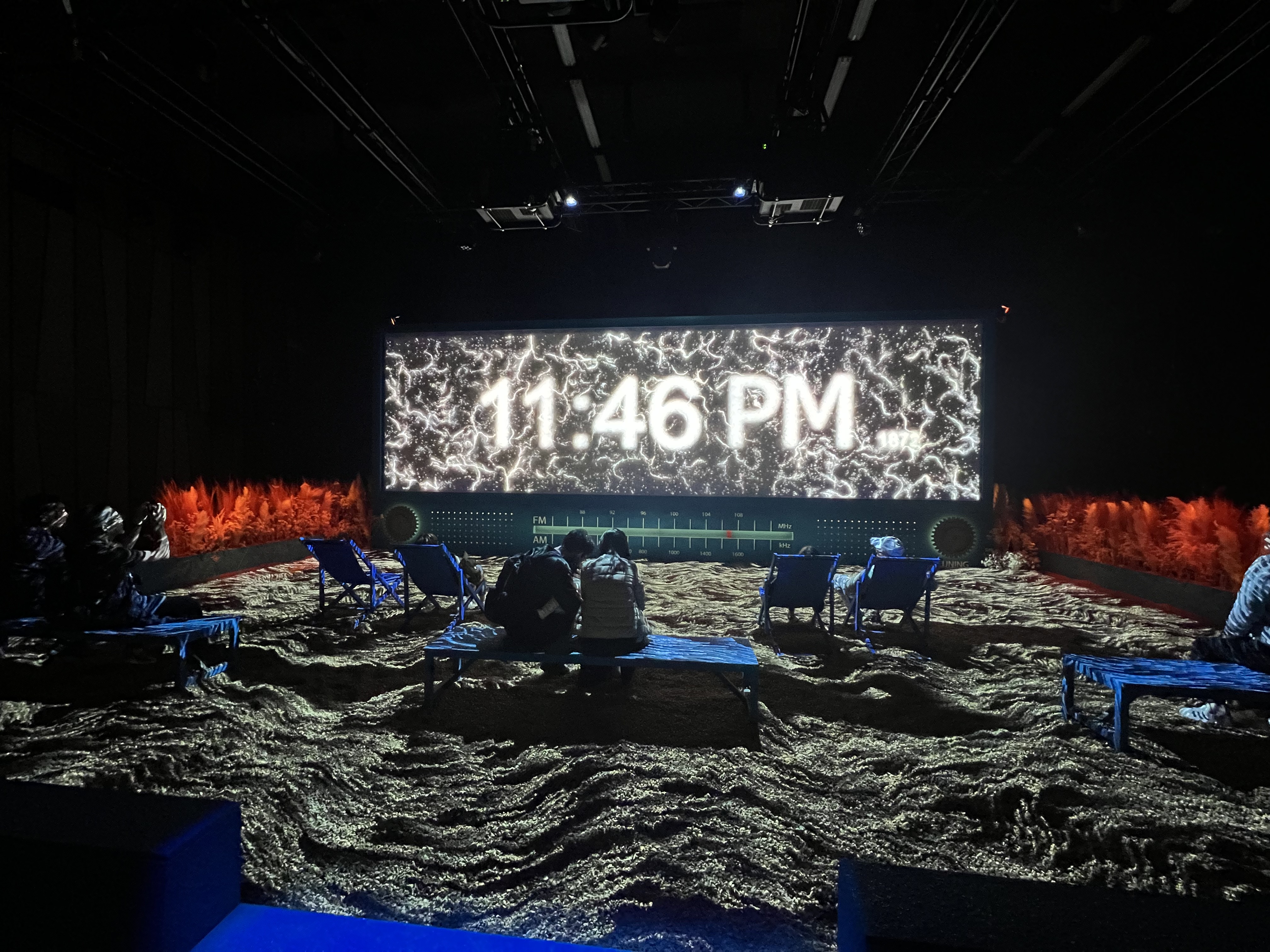
Not everyone immediately embraces this fusion of art and technology. Chan Kiwi Lan, a docent at EKCC, acknowledged that “some elderly are confused about the artwork and leave right away.” But she maintains a patient, optimistic perspective: “Everyone understands art differently, and maybe it takes more time to shorten the distance between art & tech, especially for elderly, but hopefully the EKCC would be a good gateway to collapse the distance.”
Her hope seems well-founded. Chan Siu Lun, a 65-year-old retiree who walked in out of curiosity, found himself deeply moved by “The Tides of Time.” “It is very healing,” he said with a laugh. “I could fall asleep in there in five minutes, which is a good thing – not that I get bored of it, but because it’s a very healing piece.”
When technology serves artistic vision rather than overshadowing it, the result can be universally accessible – touching hearts across generations and backgrounds.