

Hong Kong is known for its academic brilliance, but beneath its gleaming skyline lies a world of untapped artistic brilliance.
Reflecting on the words of the late actor Robin Williams, “Medicine, law, business, engineering, these are noble pursuits and necessary to sustain life. But poetry, beauty, romance, love, these are what we stay alive for,” this article unravels Hong Kong’s often overlooked artisans through theatre, orchestra, and dance.
THEATRE
“The professionals are here, you just need to fund them because no one’s willing to give up their time for free,” Freya Bargo said as she shook her head. “And the fact that some of them are, [it] just shows you how much people here are really passionate about it.”
Bargo is a 20-year-old theatre performer and drama teacher based in Hong Kong. Having started her musical journey at the impressionable age of 12, she has eight years of performing arts experience under her belt.
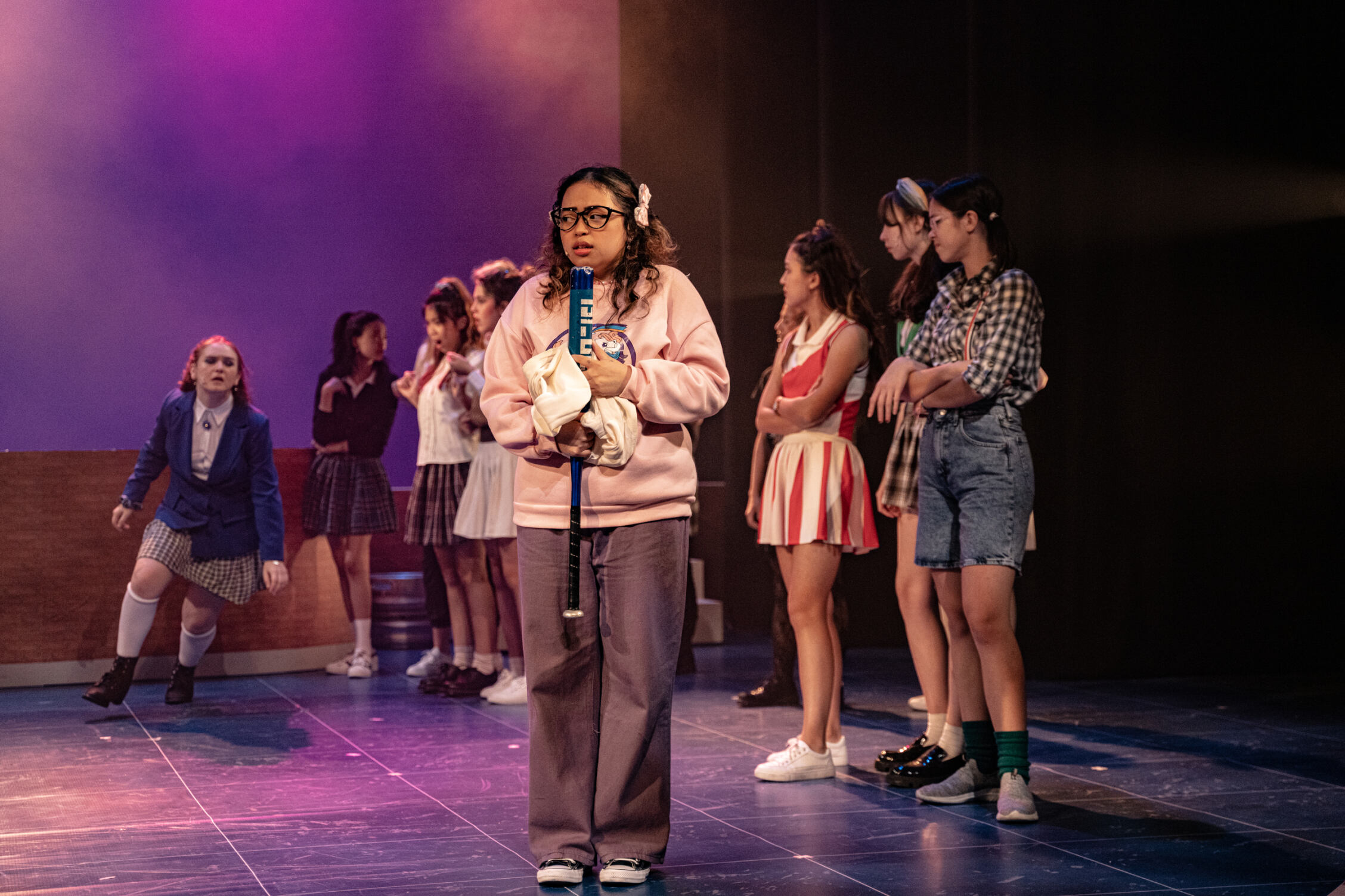
From playing the lead role of Sarah Brown in FACE Productions’ Guys and Dolls to playing the stellar role of Martha in Heathers, Bargo falls nothing short of a qualified theatre actress.
“I still have people to this day come up to me and say, ‘Wow, you’re Martha from Heathers, I watched you and I cried during your performance’,” the actress grinned. “That’s why I do it – to be able to connect not only with me, friends, but also with the audiences.”
However, it has not always been glitz and glamour for the 20-year-old. After graduating from a local secondary school, Bargo aimed to enrol in the Hong Kong Academy for Performing Arts (HKAPA) to pursue a musical career in the city. After doing some research, Bargo believed that the available courses were limited.
The Theatre and Entertainment Arts in HKAPA is only a one-year course that acts as a “feeder programme” for the school’s Bachelor of Fine Arts programme, as stated on the school’s website. The course mainly focuses on the technical work of theatre rather than performance work on stage. Furthermore, HKAPA’s Bachelor of Fine Arts Degree in Drama is taught in Cantonese, Putonghua, and English, demanding students to be trilingual.
“I feel like as an actor in Hong Kong, things are really scarce,” Bargo remarked. “Especially if you’re just limited to English-speaking opportunities.”
In contrast, the US and UK have been regarded as the top locations for English-speaking musical performers. Their theatre industries have pumped out star-studded musical productions that have been internationally loved for decades, including Wicked, The Lion King, and Grease.
“I think when people think of musical theatre, immediately they think of performances on Broadway,” Bargo said. “It was always Broadway first, that’s what you looked at.”
There are 41 Broadway theatres in New York City alone. Hong Kong, on the other hand, only has 17 performance venues.
Bargo believes that the lack of performing arts resources in Hong Kong is an “unfortunate situation.” She emphasised that with more shows, not only will there be more theatre enthusiasts visiting the city to watch them, but more foreign talents will migrate to the city for the given work opportunities.
“Performers are very mobile,” Bargo added. “People are moving across the country for opportunities provided by performing.”
The actress mentioned how her coworker moved from Los Angeles to Hong Kong because his wife was chosen to play Moana in Hong Kong Disneyland. Bargo described this as an “opportunity for more cultural exchange” and “opening up a whole new sector of industry.”
Aside from cultural expansion, Bargo has observed that theatre performance in the educational field is “lucrative” at the moment.
While having experience in dancing, acting, and singing looks good on the resume, parents often usher their kids into performing arts because it consolidates their confidence at an early age.
A 2021 study conducted by Harvard University Division of Continuing Education shows that there is a “statistically significant result” for a positive, linear relationship between performing arts experience and self-efficacy. Additionally, a 2014 study from the International Journal of Music Education found that music and performing arts programs improved students’ self-esteem.
Hong Kong, however, has become notorious for its students struggling with their mental health. There have been 28 student suicides this year, with 22 teenage suicide attempts and deaths in the last three months alone. Moreover, it has been found that over 50% of Hong Kong students show symptoms of depression, which is closely linked to low self-esteem.
“Low self-esteem, characterized by feelings of worthlessness and incapability, is often seen in people seeking therapy for depression,” Dr. Thomas A. Veeder, a professor at the Oregon Health and Science University School of Medicine in Oregon, told PsychCentral.
“Parents here want their kids to be prepared early on in terms of confidence because, theatre, in its most basic form, helps children become more confident,” Bargo said.
With the potential boost in culture, tourism, economy, and mental health among students, spending money on performing arts facilities should not be seen as a waste but rather as a long-term investment. The bottom figure explains the government’s provision of resources to several sectors of the performing arts industry from 2021-2022.
“It’s good if they can start an institution where performers can come together as funded by the government,” Bargo said. “Through that big organisation, it would be great to then separate them into different productions that they can do.”
Bargo compared the performing arts industry to ballet, believing that the latter has a more well-established industry in the city as it has guaranteed annual performances during Christmas for The Nutcracker, whereas the theatre industry does not have an equivalent. She added that the institution for ballet, Hong Kong Ballet, is more organized and centralized than the performing arts sector.
“If they did this right,” Bargo paused as she looked up and sighed. “I think the output can be really beneficial for them.”
ORCHESTRA
It’s a little like meditation for me. I love playing the piano because it gives me an escape from the stressors in my daily life,” said Jonathan Chan, a fourth-year student at the University of Hong Kong, double majoring in Computer Science and Fintech.
Chan has been playing piano since the age of 7 and used to be part of a youth orchestra, which he left to pursue his university studies.
“There are some things that just make life more beautiful, and the harmony, the unity I feel when I play or listen to the piano is that for me,” said Chan.
In stark contrast, the orchestra industry is known to be extremely cutthroat and unforgiving. Musicians face tough conditions such as anti-social working hours, intense gigs and rehearsals, financial stress, juggling multiple performances at a time, low work-life balance, and job insecurity.
“There was a period where I actually considered going professional with the piano, but after weighing my pros and cons, I decided against it,” said Chan. “The environment is really competitive and unforgiving. You need to constantly be taking every audition just in case you don’t make it through. If you’re not working full time in a major orchestra, which is extremely difficult to get into, you have to balance other jobs in the music career, like teaching.”
Internationally, the impact of COVID-19 restrictions on theatres and other performing arts venues have exacerbated these poor conditions. Hong Kong, in particular, has faced especially stringent measures, with live music categorised as a “high-risk” activity and banned by authorities for the majority of the duration of the restrictions.
While COVID-19 measures were fully dropped earlier this year, the impact to the industry is significant and enduring, with talented musicians leaving due to the financial and mental toll.
Private music venues, and even some government-funded venues are facing financial difficulties and risk shutting down permanently due to extended closures during the worst of the pandemic. The West Kowloon Cultural District Authority’s (WKCD) annual reports recorded net losses that almost doubled, from HK$869 million in 2021 to HK$1.56 billion in 2022, going through a significant portion of the government’s HK$21.6 billion fund provided in 2008.
The state of orchestras abroad are not so much better. In the UK, data showed a sharp decline in the number of workers in performing arts and total hours worked, as well as lagging recovery due to lack of prospects. The pandemic also caused some symphonies to shut down around the world. For instance, the end of COVID-19 relief cash, low donations, and ticket sales led to the end of the Kitchener-Waterloo Symphony.
While music lessons are a popular extracurricular activity for children in Hong Kong, many eventually stop due to academic reasons, like Chan. Despite the government stating in the 2023 Policy Address that they were committed to stepping up the promotion of STEAM education, the points outlined in the document only involved components about STEM.

These included the introduction of mathematical modelling, a new curriculum framework for the Science subject, and implementing coding education in primary schools, but nothing to strengthen the state of performing arts subjects, suggesting the government’s strong preference for STEM education.
The benefits that visual and performing arts bring to children from a young age, while not immediately apparent, have been well documented by various music foundations, such as The National Association for Music Education (NAfME), PBS Parents, VH1 Save the Music Foundation.
Learning to play a musical instrument can provide children with several cognitive, social and emotional benefits. This is because no one subject is wholly independent from one another. A study conducted by the University of California found that students who received piano lessons scored 34% higher on tests, indicating that music uniquely enhances high brain functions required for subjects such as mathematics and science.
Participating in the arts from an early age can also provide children with soft skills, such as self-expression, self-esteem and confidence, patience and perseverance and nurturing emotional development. Despite obligatory classes in primary school, more needs to be done to engage children in orchestra and the performing arts, and push its importance in Hong Kong society.

“As a STEM major myself, I know the importance of these types of subjects, but I can also see the benefits that music can bring to the youth… which can also complement them in their future academic lives. We must make sure that it is not just STEM, but STEAM,” said Chan. “Orchestra and the performing arts also form a big part of the appeal of Hong Kong as an international city of culture, and I hope the government can realise this and push this idea forward.”
Hong Kong has remarkably low attendance rates for the performing arts; just ten percent of people aged 15 to 74 years attended theatre in a 12-month period, according to the ADC’s 2018 Arts Participation and Consumption Survey, the latest available data. In comparison, 33.3 percent of New York City residents attended a Broadway production in 2018, a figure which does not include audiences to the city’s many other theatre offers.
The first steps towards the increased importance and appreciation of performing arts in Hong Kong will begin when the government truly incorporates the arts aspect into their so-called “STEAM education” and values its contribution to Hong Kong society.
DANCE
In the midst of the dynamic backstage activities at the Hong Kong Coliseum (HKC), one dancer stands at the epicenter of her dreams—Elisa Chow, a 20-year-old student and dancer. As the performance draws near, the whirlwind of backstage activities envelops Chow, who recently achieved her dream by securing her first dance performance. For Chow, the backstage commotion represents a surreal manifestation of a journey that began with relentless dedication and late-night rehearsals.
“To be there at the Hong Kong Coliseum was a dream come true,” Chow recalls. “Performing on that huge stage is a big deal for all dancers in Hong Kong, and sharing it with some of the best talent in the city was an honour.”

In this dynamic space where passion and precision collide, Chow embodies the spirit of countless performers who have stood in the same shoes, each step a testament to the unwavering pursuit of excellence in the performing arts.
However, it took the accident of the severely injured dancer, Li Kai-yin, for Chow to call it quits. Li Kai-yin, a dancer more widely recognized by the name “Mo,” experienced severe neck injuries resulting in paralysis when an LED screen fell on him on July 28th, 2022, during a live concert by the Hong Kong boy band Mirror at HKC.
“That could have been me! I don’t know what I’d do with myself if that happened to me,” Chow says. The accident sparked questions about the rights of Hong Kong dancers and their employment status.
In August 2022, Chan Wing-yip, the vice-chair of the Hong Kong Theatre Arts Practitioners Union, conveyed to Radio Television Hong Kong (RTHK) that dancers in Hong Kong possessed limited bargaining power, making it challenging for them to resist unreasonable arrangements.
The lack of fairness and stability in Hong Kong’s dance industry could be attributed to society’s negative perception of dancing.
“In Hong Kong, arts like dance are seen as a hobby. When people pursue arts, they must go out of their way to prove to others that they are allowed to follow their passions,” explains Max Vogts, a Senior Tutor of St. John’s College at the University of Hong Kong.
Vogts attributes Hong Kong’s history of immigrants trying to make a new life and their mindset of ‘working hard’ to the lack of support in the performing arts. “When you are from a poor background, but you work hard to get out of it, you hope that your kids have the same ethics and do not quote on quote waste time,” Vogts explains.
Wu Xiaogang, a sociology professor at New York University of Shanghai, stated on the Consumer News and Business Channel (CNBC) that in traditional Chinese thinking, not pursuing a college education or investing effort in job applications may lead to occupations like waitressing or working as cleaning staff on the street.
Moreover, Vogts argues that Hong Kong society perpetuates the idea of “proper jobs” through the education system. “In Hong Kong, your high school grades either limit or open new opportunities for you. If you get IB 45, you do medicine; IB 44, you do dentistry; IB 43, business; IB 42, law,” Vogts explains. “This mindset leads people not to pursue the careers they really want but instead what they believe they are supposed to do to live up to societal expectations.”
This negative attitude in Hong Kong towards dancing causes conflicts within families as dancers struggle to garner their families’ support. “My family is still not supportive of my career path. I constantly have to prove to them that I can make a living for myself,” says Jonathan Lee, a 29-year-old dance teacher who has been teaching dance for over 10 years.
“They [my family] would prefer that I was a doctor, lawyer, or engineer,” says Chow. “They don’t support me because of how unstable it is, and I can understand their concerns because some dance jobs I did one year ago I am still not paid for,” Chow remarks.
The solution to these concerns? Funding!
According to the Hong Kong Government’s February 2023 press release, ‘Development of arts and culture in Hong Kong,’ the government has allocated $42 million for organising the first Hong Kong Performing Arts Expo in the second half of 2024.
Lee recognizes the improving governmental policies, but he believes that more should be done. “If we compare Hong Kong’s dance scene to places like Korea, they are doing so much better because their [state] funding for the entertainment industry is a lot stronger and bigger.”
According to the South Korean Government, the South Korean creative economy is estimated to be worth HK$279.8 billion in 2019, compared to HK$63.6 billion in Hong Kong. This can be attributed to the South Korean Government’s efforts in the ‘Hallyu’ or ‘Korean Wave’ movement in 1999, paving the way for the success of the Korean Popular Music industry, commonly known as K-pop. According to CNBC, K-pop has become a global business with sales exceeding US$5 billion, whereby in 2020 alone, the K-pop industry sales grew by 44.8%. Furthermore, Google Trends demonstrates a growing global interest in K-pop (Figure 1).

In the K-pop scene, dancers are now recognized as a new group of “celebrities” with the advent of shows like Street Woman Fighter (2021) and Street Man Fighter (2022). “I’m currently on exchange in Korea, and the dance industry here is so much better than in Hong Kong. In Korea, dancers are given a lot more recognition; they are seen as artists. In Hong Kong, we are just seen as backup dancers and thus not seen as valuable,” Chow shares.
Nonetheless, there is growing optimism regarding the dance scene in Hong Kong. For Chow, it is the passion and dedication of Hong Kong dancers that give her newfound hope for the future of the industry she loves. “Despite all the negatives, I still love the dance industry because of the community of dancers and the art we create,” Chow explains. While Hong Kong may not yet occupy the pinnacle of the dance world, there is still unwavering hope that one day it will.
“There is always hope! Hong Kong is a very young city; it’s in its early stages, so I can’t wait to see what Hong Kong becomes,” Vogts expresses.